Great Knot’s journey along the East Asian-Australasian Flyway
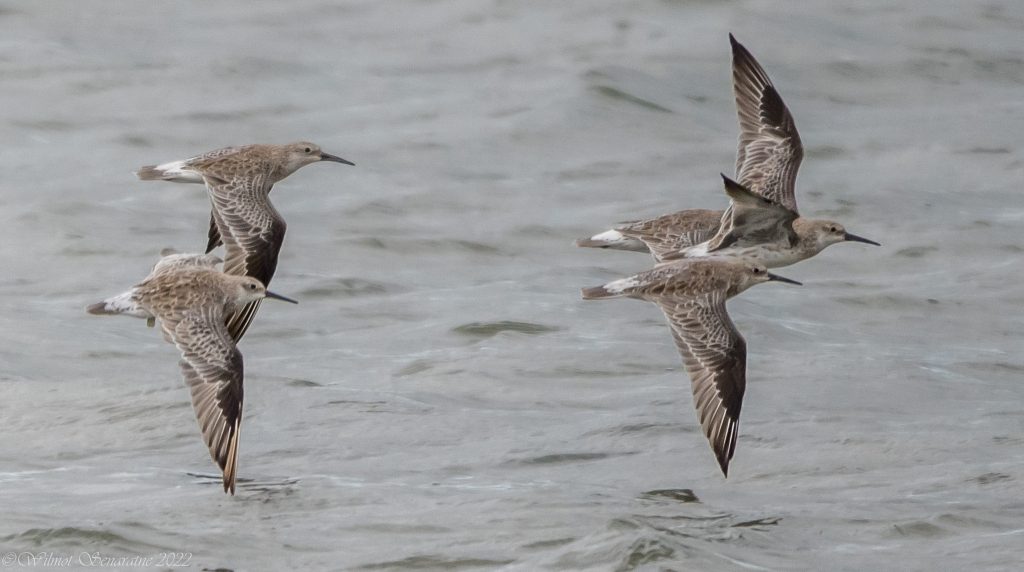
Discover the Key Biodiversity Areas used by Great Knot as it travels across the East Asian-Australasian Flyway.
Header Image: Great Knot © Wilmot Senaratne.
Flyways are superhighways in the sky, and twice a year, millions of birds embark on an epic journey along the East Asian-Australasian Flyway (EAAF). This extraordinary route spans diverse landscapes, stretching from the Siberian Arctic tundra through the tropical wetlands of Southeast Asia to the shores of Australia and New Zealand. The EAAF supports at least 523 bird species across two continents.
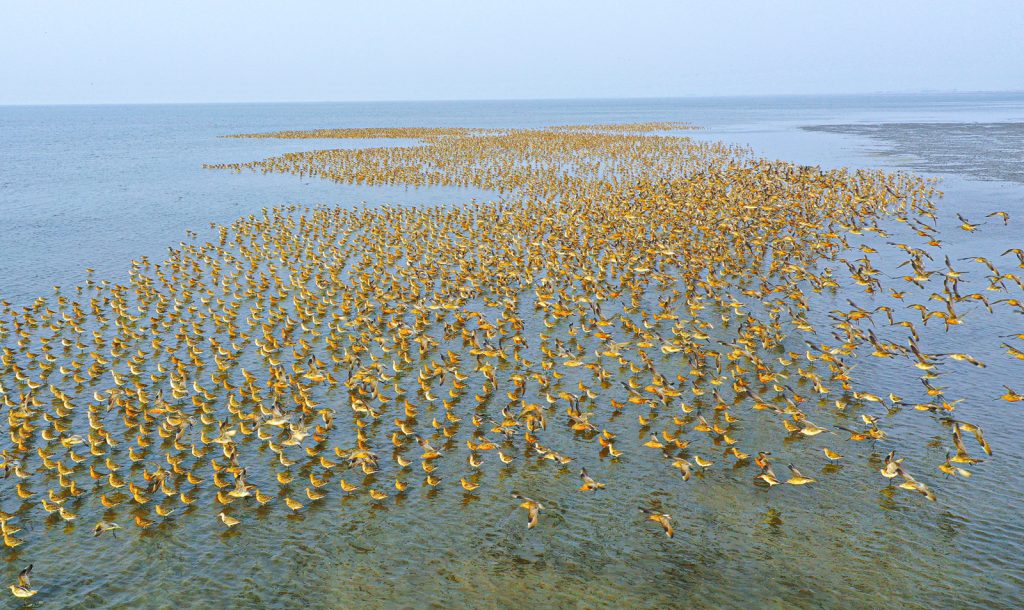
Among them is the remarkable Great Knot, an Endangered shorebird that makes a long-distance journey. This species will fly from its breeding grounds in the mountains of Russia to warmer wintering grounds in Southeast Asia and Australia, but also throughout the coasts of India, Bangladesh, Pakistan, and the eastern coast of the Arabian Peninsula.
On its journey, the Great Knot crosses various sites, including 1,416 Important Bird and Biodiversity Areas and Key Biodiversity Areas. Some of the key sites that support this migrant are the Inner Gulf of Thailand in Thailand, Yalu Jiang Estuary in China, and Sonadia Island in Bangladesh.
A Vital Coastal Corridor: The Inner Gulf of Thailand
Along the flyway, the Inner Gulf of Thailand serves as an indispensable coastal corridor that is recognised as one of the most important sites for migratory waterbirds in mainland Southeast Asia. This confirmed Key Biodiversity Area supports between 150,000 and 300,000 birds annually, including Great Knot. A key sanctuary within this landscape is Pak Thale, where our Partner, the Bird Conservation Society of Thailand, works alongside local communities to integrate conservation into their livelihoods by becoming ecotourism guides and producing biodiversity-friendly salt.
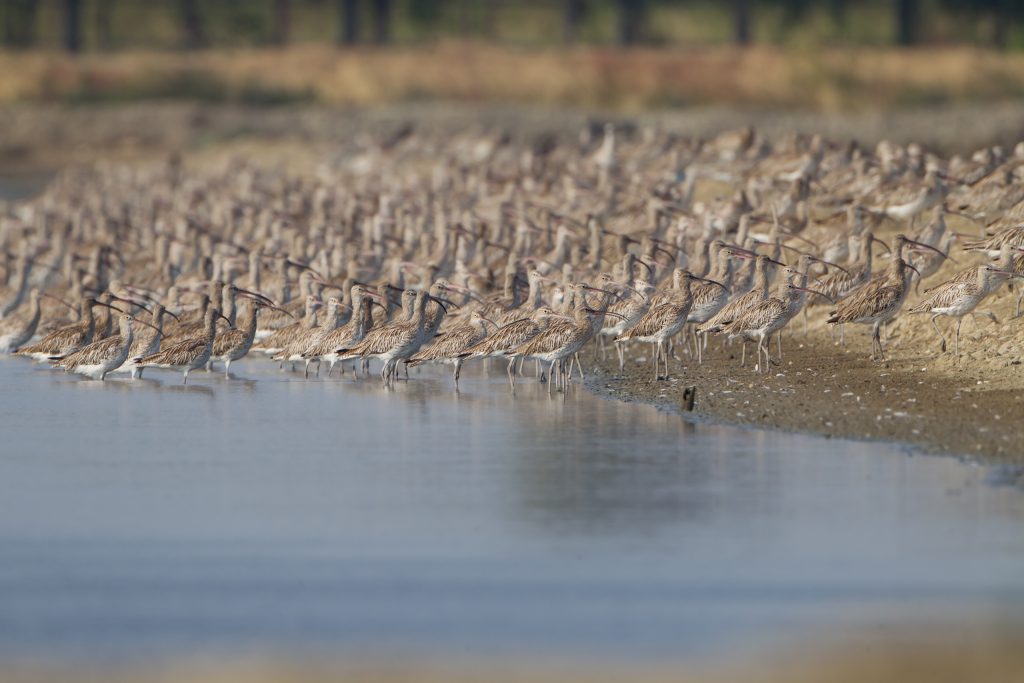
Sonadia Island: A refuge in Bangladesh
Continuing its route southward, Great Knot finds sanctuary at Sonadia Island in Bangladesh. Confirmed as a Global Key Biodiversity Area of international importance, this low-lying island covers approximately 29.8 km2. For Great Knot and other travellers along the flyway, Sonadia Island provides essential coastal intertidal habitat to rest and refuel, and hosts some of them during the wintering season.
Connecting Cultures and Livelihoods
The migration of Great Knot does more than bridge geographical distances; it connects the lives and cultures of billions of people. Effectively conserving Key Biodiversity Areas such as the Inner Gulf of Thailand, Yalu Jiang Estuary, and Sonadia Island is essential to ensure that Great Knot’s incredible journey continues. By protecting these sites, we safeguard biodiversity and the ecosystems that sustain human life across the entire flyway.
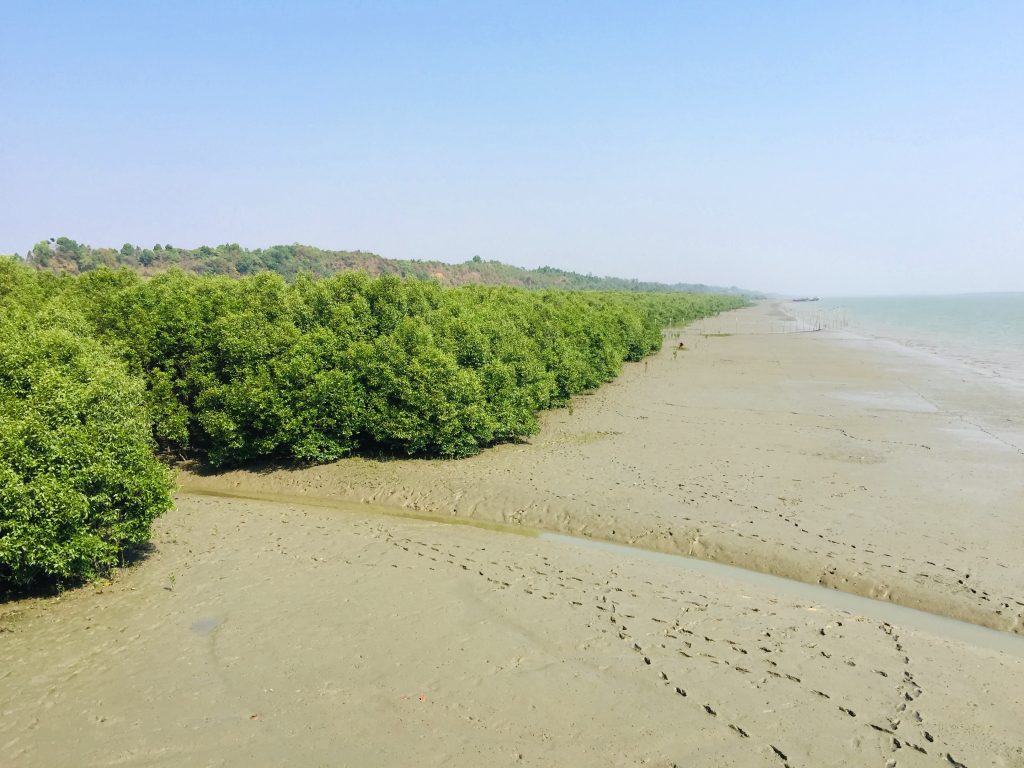
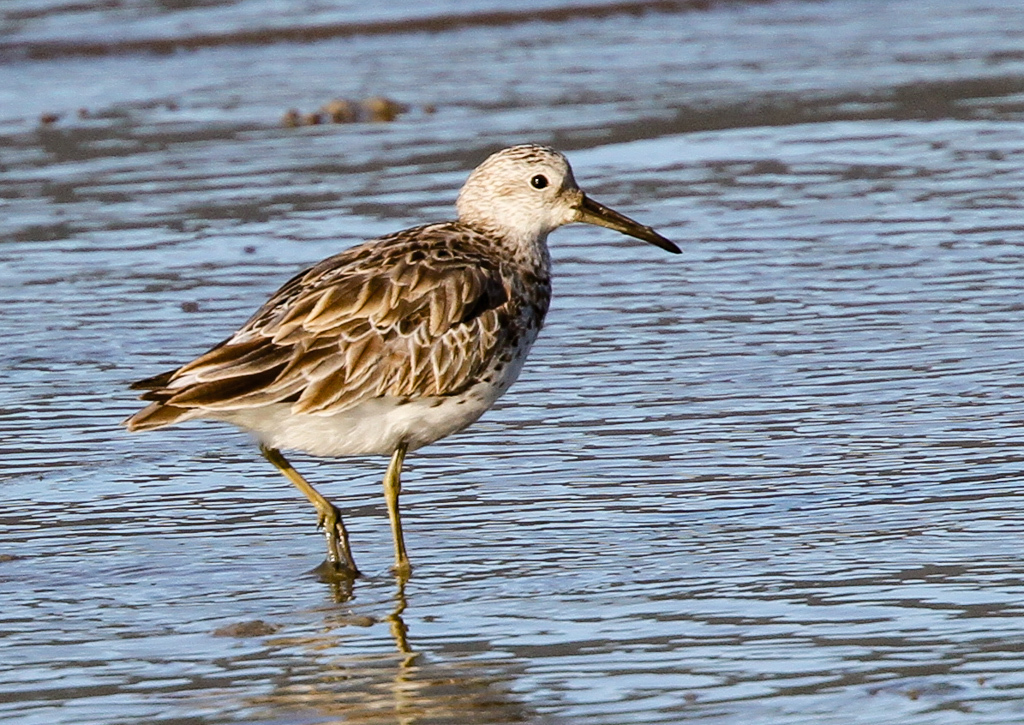
A Strategic Northern Hub: Yalu Jiang Estuary
As the Great Knot nears its northern breeding grounds, it reaches the Yalu Jiang Estuary in China, a 689 km2 Key Biodiversity Area dominated by reedbeds and tidal flats. This site serves as a critical site for migrant waterbirds where peak daily counts can exceed 70,000 birds during migration. However, this vital link faces ongoing pressures from oil and gas drilling, industrial development, and human disturbance.

Play your partto protect migratory birds
Your support is critical to ensure that we can continue to deliver high-impact and long-term conservation for both people and nature.