Protecting Pak Thale for the Future of the Flyway

Thousands of birds depend on this site, but now it's in danger. Your voice can help.
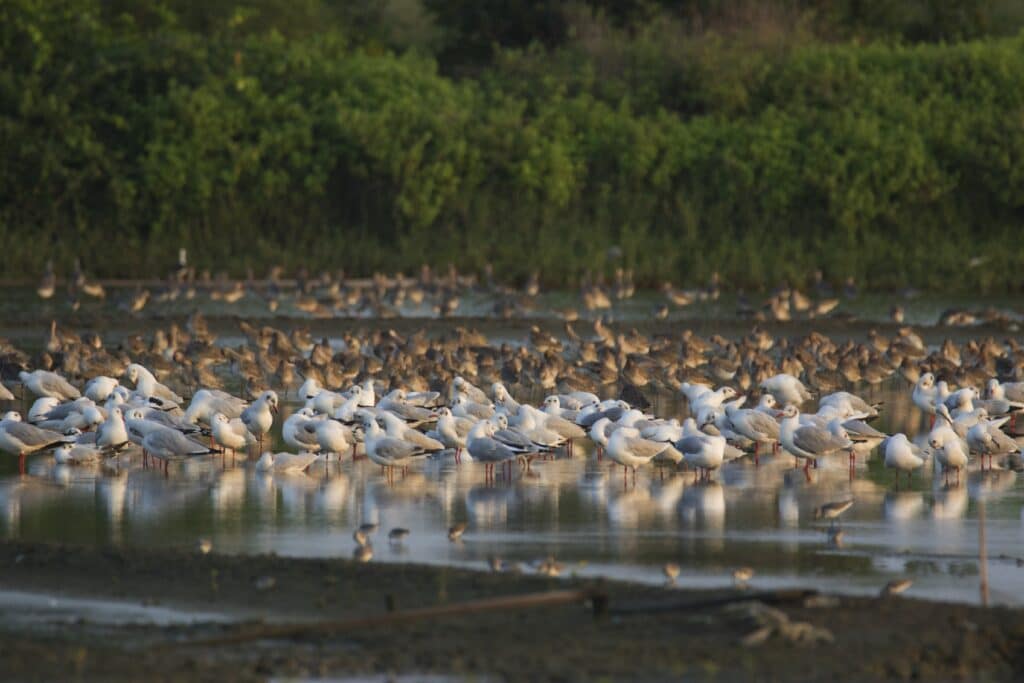
Against the clear blue backdrop of the Gulf of Thailand, hundreds of birds suddenly take flight. Their small white and grey wings create a pixelated wall that skims the surface of the water. These shorebirds are all here for the same reason: to feed on the plentiful organisms living on the coastal mudflat. But all of this is now under threat.
Every winter, these shorebirds descend upon the wetlands at Pak Thale Nature Reserve in Southern Thailand, having travelled from their summer homes as far north as the Arctic Circle. This is a vital stopover and wintering site on the East Asian-Australasian Flyway, one of the four major land migration routes for birds.
Pak Thale has been such an important part of this route, that in 2019 Thailand BirdLife Partner, Bird Conservation Society of Thailand (BCST) purchased 8 hectares of land along the coast to be used as a wildlife sanctuary. It has since hosted some of the rarest birds in Asia, as well as the birdwatchers hoping to see them.
The small size of Pak Thale Nature Reserve allows birdwatchers to have great views of birds like the Critically Endangered Spoon-billed Sandpiper, or Endangered Far Eastern Curlew, Great Knot, and Spotted Greenshank. It’s possibly the only place in Southeast Asia where birdwatchers can see all of these species easily in one day. Ecotourism has since become a valuable income stream for the community. BCST has even trained the community to become guides for the reserve. On top of this, BCST engaged with local salt farmers to develop new profitable and sustainable avenues for them to sell their biodiversity-friendly salt.
So, when news came along of a proposed oil refinery and powerplant mere kilometres from Pak Thale, BCST knew that this would be devastating for both the birds and the community.
Such a close oil refinery could pollute both the air and the water, driving away the roughly 270 birds species that call it home. The powerplant could introduce its own hazard as well, as low flying birds may then collide with live electrical wires. And without the birds, there is no longer ecotourism or a market for biodiversity-friendly salt.
When migratory birds lose a site like Pak Thale, it’s not as simple as them finding another site to rest. Moving sites takes effort, which requires adequate food and rest. Sadly, across the flyway we are losing coastal wetlands to rapid development, meaning those rest stops are becoming less frequent. For birds like the Spoon-billed Sandpiper that has fewer than 500 adults left in the wild, losing a site like Pak Thale would make a significant dent in their population.
Help us make sure that this doesn’t happen. Sign the petition here to share your voice. Together we can ensure that Pak Thale remains a haven for migratory birds.

“We cannot guarantee when the final migration of migratory birds will occur, because both humans and birds are facing the same fate. Let’s work together to stop the fossil fuel industry.”
Niyom Thongmeun, Pak Thale Manager for BCST