Voices of the Flyways: Kwame Boafo
In this series, we meet conservationists to learn more about their vital work right along the world's migratory flyways.

Migratory birds connect landscapes, countries and even continents through their incredible long-distance journeys. As they travel to and from their breeding grounds, birds use routes known as ‘flyways’.
We have been working with our Partner in the UK, the RSPB, with the support of the Ecological Restoration Fund (ERF), on an ambitious project to protect migratory birds along one of these globe-spanning routes – the African-Eurasian Flyway, which stretches from the Arctic all the way to the southern tip of Africa. Find out more about the RSPB’s flyway conservation work here.
So what does it take to protect migratory birds and their habitats? Find out below!
Protecting wooded savannahs in Ghana
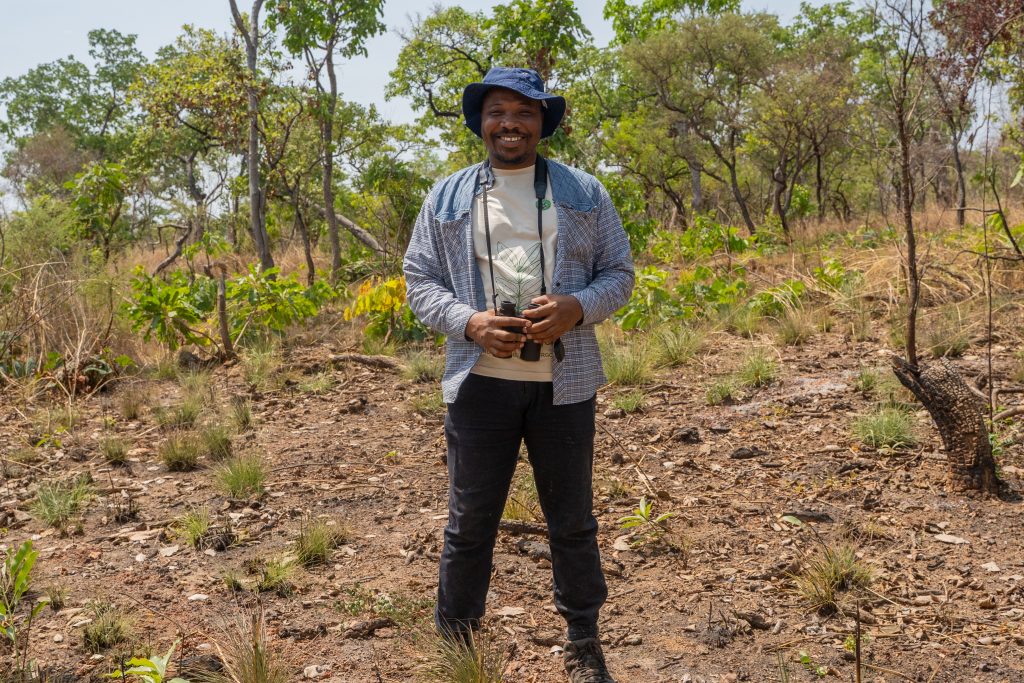
Kwame Boafo is the Programme Manager for the Research & Conservation Unit at Ghana Wildlife Society, the BirdLife Partner in Ghana. Every year, the wooded savannahs of northern Ghana welcome the arrival of thousands of migratory landbirds that have travelled across the Sahara to rest and feed here before returning north to breed. Join Kwame to find out what is being done to protect this precious habitat and the birds that depend on it.
Tell us about where you work. What is the habitat like, and what makes it important for migratory birds?
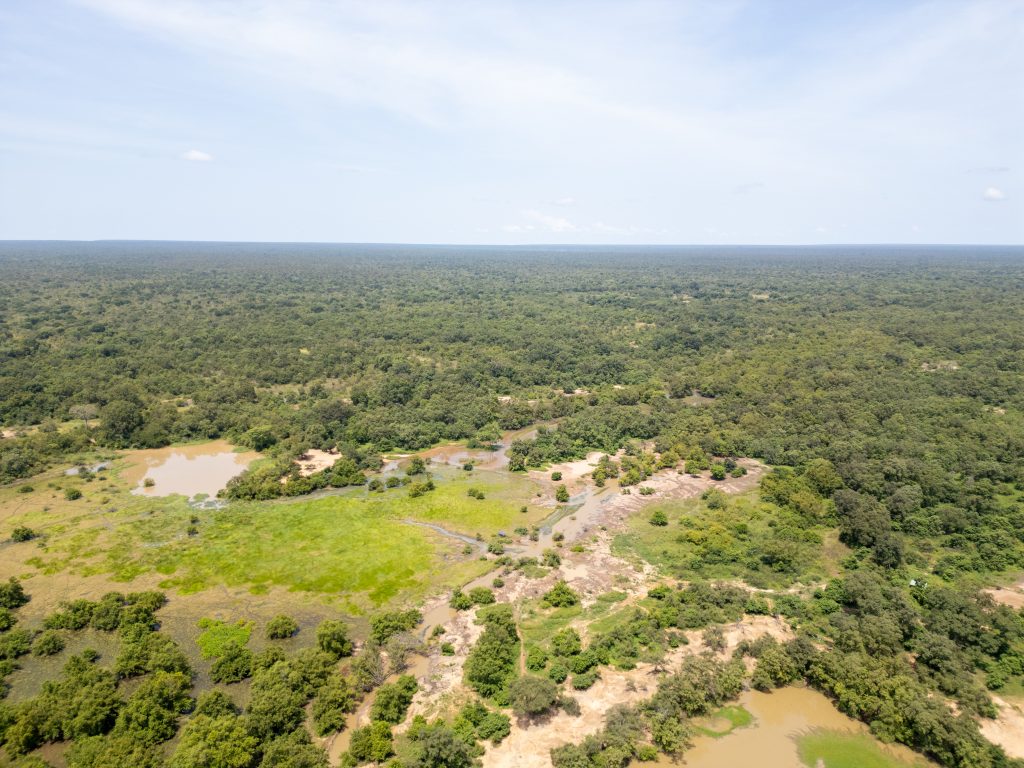
Kwame Boafo: “The Mole Ecological Landscape is in north-western Ghana and within this landscape you have savannah woodland and grassland as well as riverine and close canopy forest.
At the heart of the landscape is the Mole National Park. Every year, the park welcomes a wider variety of migratory birds, including European Pied Flycatcher, Willow Warblers, and Tree Pipits. You also see migratory raptors, including Osprey, European Honey-buzzard and Montagu’s Harrier, while the park is also a stronghold for some of Ghana’s Critically Endangered vultures. It is important both as a stopover and over-wintering site for migratory landbirds, providing an important lifeline for birds arriving here after crossing the Sahara. Mole is like a place of refreshment during these strenuous annual journeys.
One of the striking characteristics of the landscape is the transformation that it undergoes annually. The dry season is followed by extensive burning, both accidental and deliberate, which is done both by livestock grazers as well as those trying to mitigate wider fire damage. It is a landscape that tells a story of resilience and transformation. Resilience on the part of the biodiversity and also on the part of the people that have to navigate these extreme changes and with whom we are working to help manage the land sustainably for the benefit of both communities and wildlife.”
The wooded savannahs of northern Ghana are a key site for migratory birds using the African-Eurasian Flyway. © RSPB/Nick Williams (rspb-images.com)
“Conservation is about both people and nature. We’ve been able to establish the link between the people and nature, and we are hoping to build on this.”
Kwame Boafo, Programme Manager for the Research & Conservation Unit at Ghana Wildlife Society
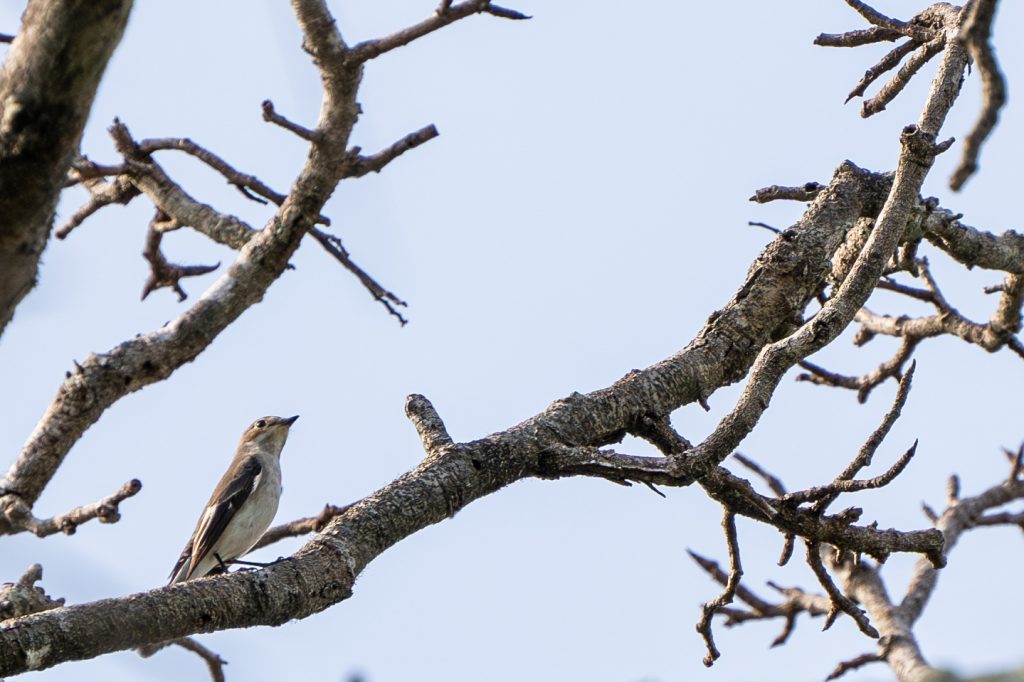
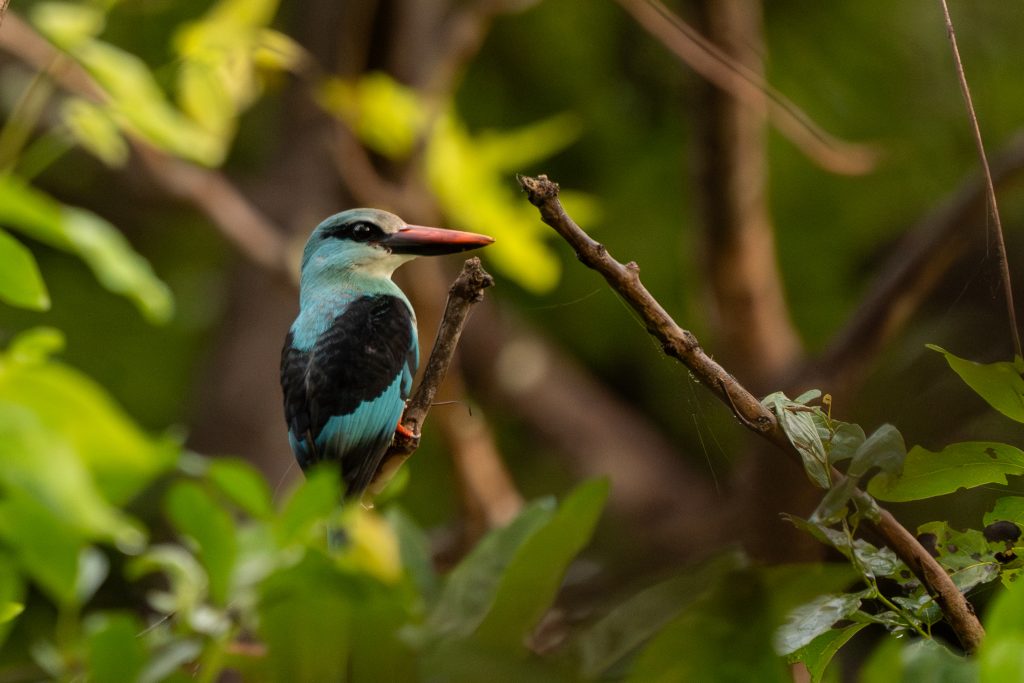
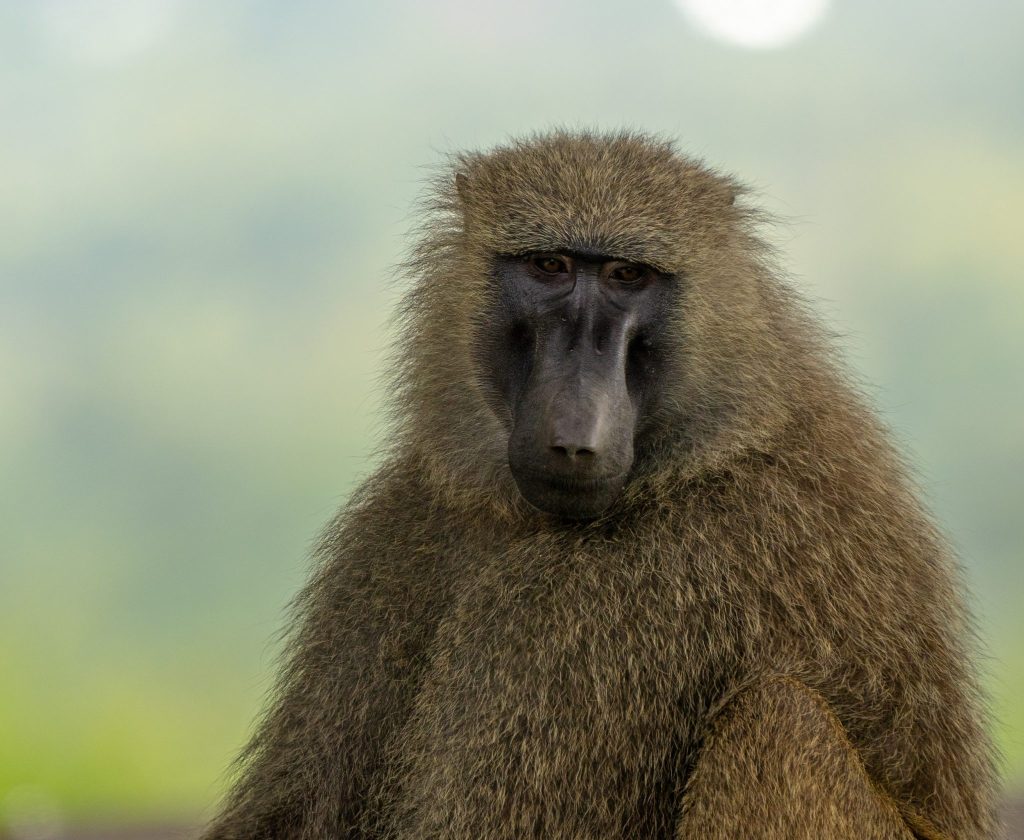
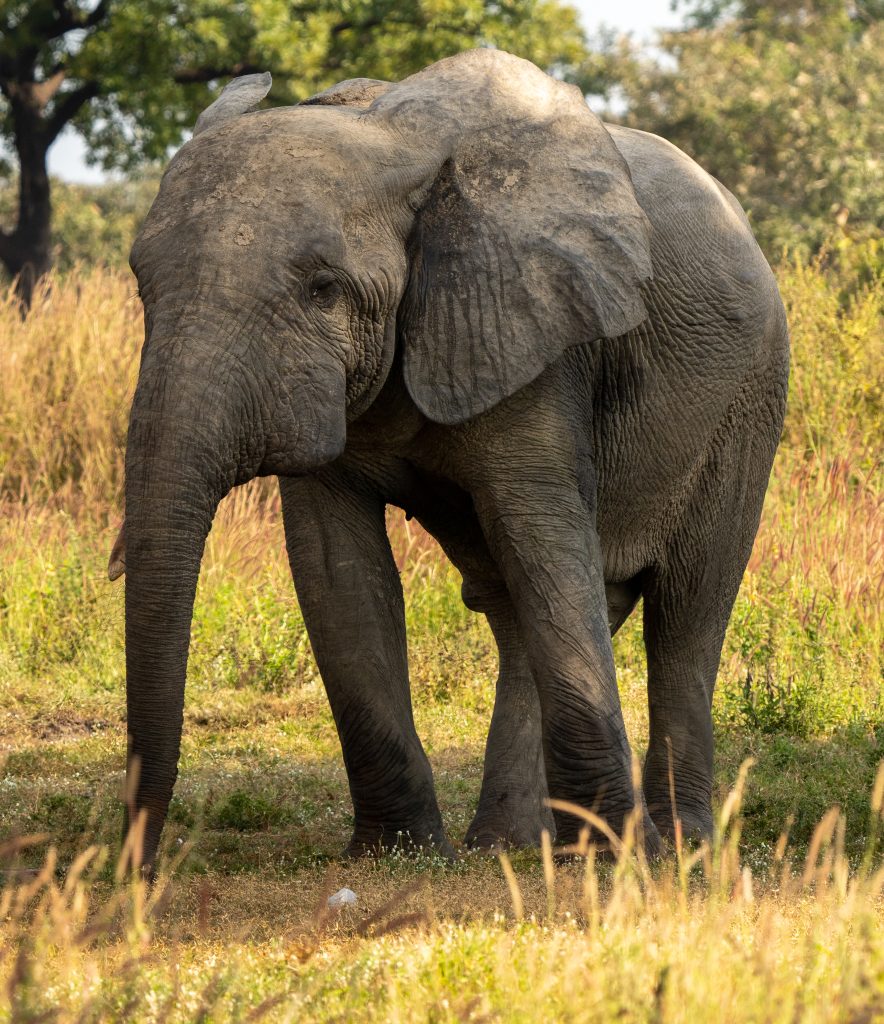
Wildlife of the Mole landscape includes: European Pied Flycatcher (top left), Blue-Breasted Kingfisher (top right), Olive Baboon (bottom left) and African Bush Elephant (bottom right). © RSPB/Nick Williams (rspb-images.com)
Not everyone knows how important the flyways are. What do people find most surprising about the species and habitats you’re protecting?
KB: “Usually people from the communities we work with become fascinated when they learn that birds are able to fly across oceans and deserts – they find it very incredible and they lean in to hear more of what we are saying.
Some of them, as young boys or people who hunt, have shot birds with a catapult and they have found rings on them. So, when we start telling them about the struggle that these birds have to go through to come here, then they begin to connect and say ‘oh yes this makes sense because we saw a bird with a ring and we thought it was strange.’ So it fills in a missing link in their understanding of some of the things that they’ve encountered.”
If you had to choose one species to represent your flyway, what would it be and why?
KB: “I spent a lot of time working on the Wood Warbler, so I really love that bird. But beyond my own passion, the bird that I would say best represents the landscape because of its ability to navigate all its challenges and still continues to thrive throughout the migratory season is the European Pied Flycatcher. You’ll be able to record European Pied Flycatcher, even singing, as early as October. With most of the migratory birds, you would hear them singing, maybe in March, when they are about to make their journey back.”
What have you and your organisation been doing for migratory birds under the ERF project?
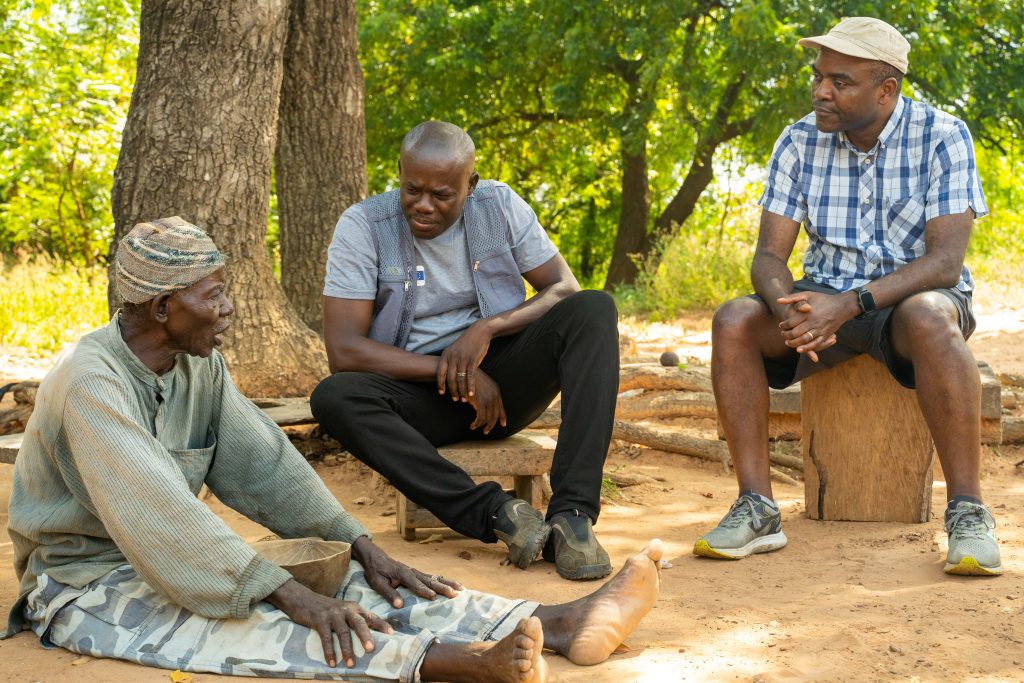
KB: “There are around 40,000 people living within a 5km radius of the national park. Most of these communities have buffer areas established, called Community Resource Management Areas or ‘CREMAs’. In the south, however, we identified a gap around the communities of Kananto and Kabampe. Due to the strategic location of these communities, sandwiched between two protected areas, we have been working with them to establish a CREMA to assist them to sustainably participate in the management of the landscape and its resources as well as reduce human-wildlife conflict. And, in brilliant news for the project, the new CREMA has now been officially inscribed. A CREMA gives a community more power over their own resources and supports them to more fully participate in decision-making and benefit-sharing.
One of the other main activities we are carrying out is restoration of degraded areas with native tree species. This not only provides cover for wildlife and restores ecosystem services but, in addition, the trees we are planting also support the livelihoods of communities. For example, 90% of the women in the Kananto-Kabampe CREMA collect shea nuts which is one of the major sources of income for them.
So we collect seeds of shea, dawadawa and other ecologically and economically important species. We then nurse the seedlings for propagation within a nursery that has been established by the ERF project. We have already planted 5,000 seedlings thanks to the help of local communities and now we are monitoring germination ready to plant more during the upcoming rainy season. We aim to have planted at least 10,000 young trees by the end of the project. Of course we are not just planting, we are also replacing those that die. Planting is easy, keeping them alive is harder. So planting at the right time and making sure you tend to the seedlings is very essential for survival.”
What other initiatives have been happening as part of the project?
KB: “We have provided training in agroforestry techniques and increasing yields on farms, as well as connecting communities to external markets. We have a bee-keeping initiative as well because bees are one of the most important pollinators for many of the trees which these communities rely on and for the landscape as a whole. Our hope is that these initiatives will reduce encroachment into the reserves, especially during the dry season, because when communities have more money, there will be less pressure to venture into the park or to cut trees.
We are also working on citizen science alongside the local communities. For example, we have worked together to deploy recorders to carry out passive acoustic monitoring of birds. We are particularly interested in comparing the bird activity across degraded, restored and non-degraded areas.”
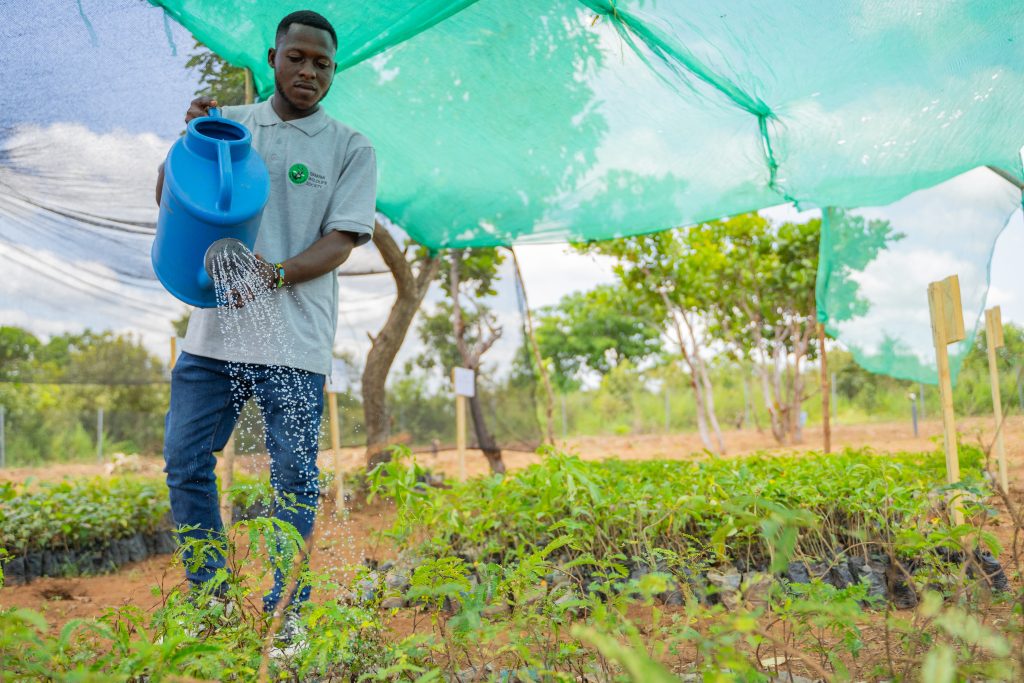
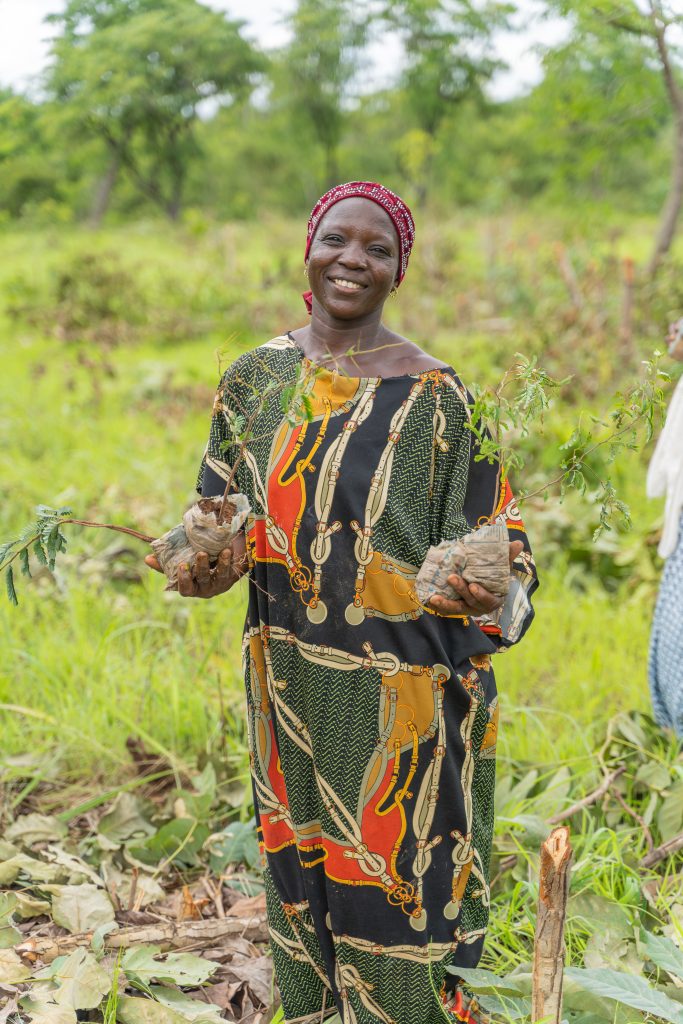
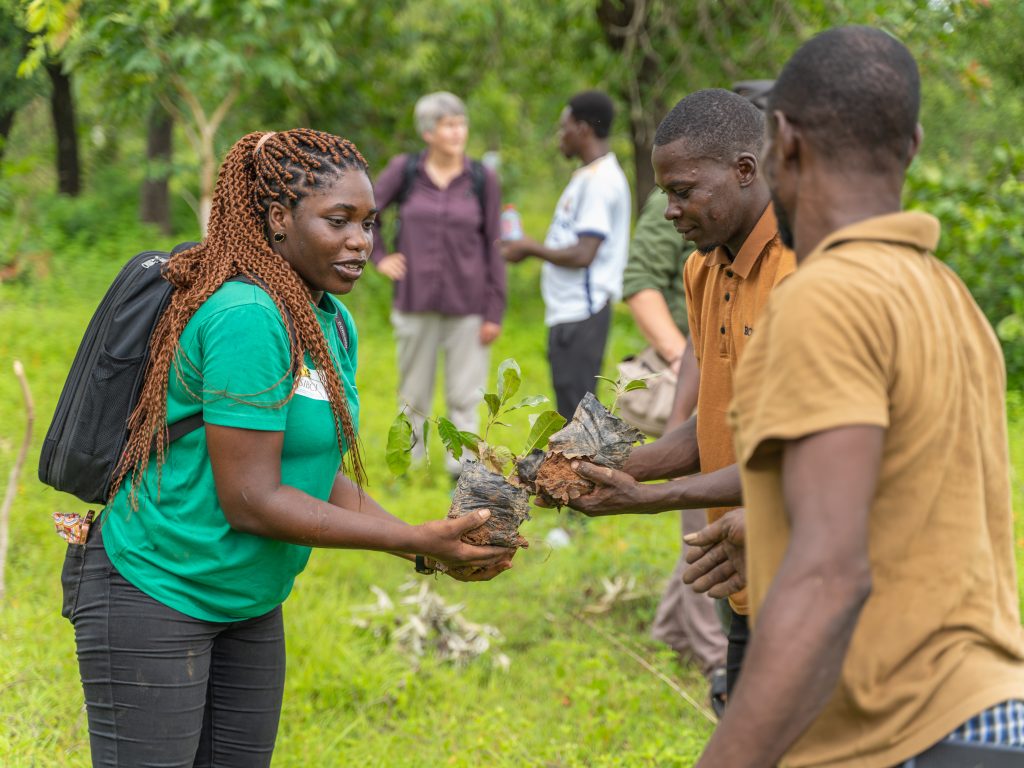
Community members and Ghana Wildlife Society working together to restore degraded areas. © Ghana Wildlife Society.
What are the biggest challenges you face?
KB: “There is a lot of slash-and-burn agriculture practised in the landscape. Often, people try to confine the burning to the cleared area, but sometimes it spills over into other people’s farms or into reserves. When it comes to our restoration work, it’s not just fire that is a challenge. You have a harsh environment that is dry and has a relatively limited rainfall season. So you have to be very strategic in how you are planting, and you must be very mindful of the science and understand the ecology and the phenology of the trees.
One of the other difficulties we’ve faced is getting communities to buy into what we are doing when there is often concern for their livelihoods. It’s about trying to find a balance that accommodates both their livelihoods and the conservation of migratory birds and other wildlife while knowing that they face issues of crop-raiding, human-wildlife conflict, and limited resources to compensate and manage this. So it’s challenging but not impossible.”
What makes you feel optimistic about your work?
KB: “We’ve seen how these communities, despite the challenges they face and sometimes varying appreciation for wildlife, are willing to come together and work with us. The trust is building, but it has been a process. When we first started speaking with them about the CREMA, they thought it was about grabbing their land. But as time went on and they saw researchers in the forest looking for birds, they realised ‘no, these people are just here for the birds’. And they are beginning to appreciate the importance of wildlife beyond seeing it as food or as a nuisance on their farms.
Conservation is about both people and nature. We’ve been able to establish the link between the people and nature, and we are hoping to build on this.”
What’s the funniest or strangest thing that’s ever happened to you in the field?
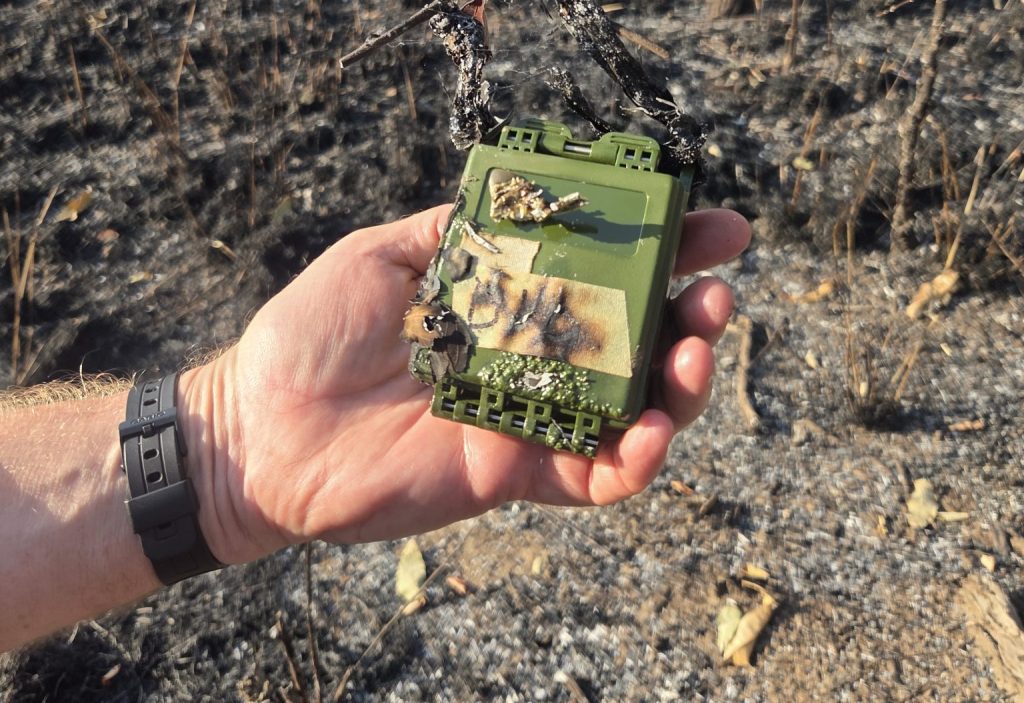
KB: “Recently, some of our acoustic monitoring devices got burned – and this was at a time when we were not expecting any fire. But the funny thing was that, even after the devices were burned, they were still recording! That was very interesting, and we were very happy to retrieve the data from those recorders.”
Acknowledgements
The Ecological Restoration Fund supports work that protects biodiverse hotspots, rejuvenates degraded landscapes and promotes local environmental activism. It is committed to re-establishing nature’s essential interconnections while fostering cultural, social and economic opportunities for the communities inhabiting those landscapes.