Puffins’ cliffs might turn quieter this year
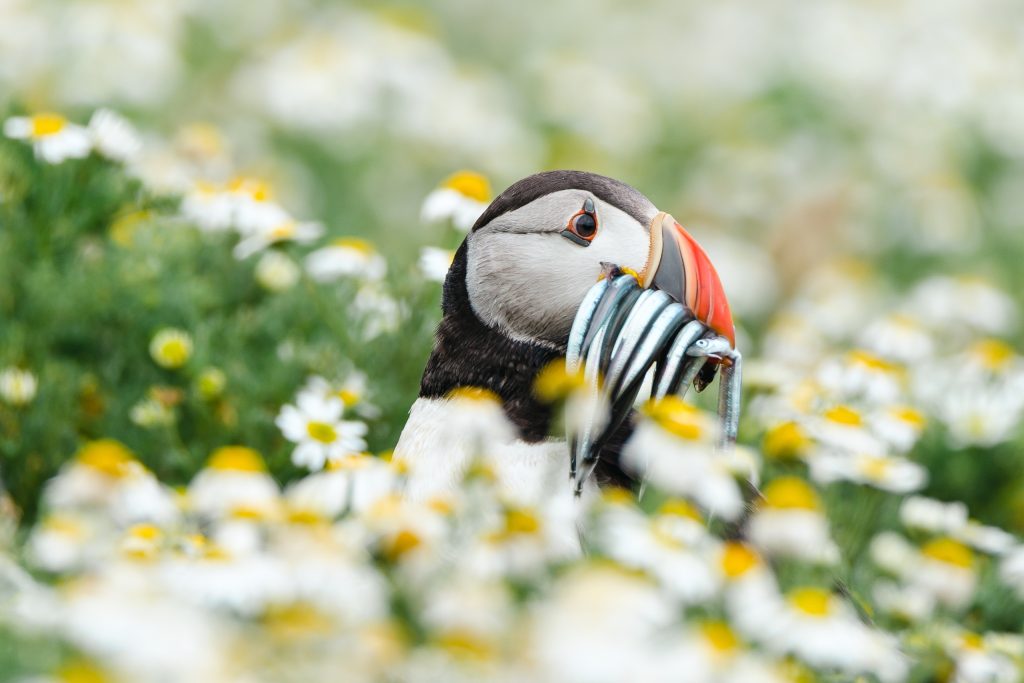
After a brutal winter in the Atlantic, many seabirds were washed ashore and won’t return to their breeding grounds.
Atlantic Puffins (Fratercula arctica) are an incredible and unmistakable species. With their bright red beaks and distinctive calls, they are among the most iconic seabirds in Europe.
They spend most of their lives at sea, sometimes not touching land for up to eight months. But from April to August each year, they populate many northern European coastlines across the Atlantic.
As the Spring breeding season approaches, Puffins are beginning their journey back to shore. But this year has not been easy. When this winter ended, scientists and conservationists witnessed a true horror scenario. More than 38,000 seabirds have been found stranded along the Atlantic coasts of Spain, Portugal, and France. Hundreds of dead Puffins were found washed up on the shores of Cornwall in the UK. In comparison to two dead Puffins in the previous year, this year’s winter wonderland became a crime scene.
As rough storms hovered over the seas this last season, the way back to land has not been easy on the seabirds and especially not for Puffins. Puffins rely on their eyesight to hunt, and need clear water to find food. But rough sea conditions make finding food extremely difficult and after a long journey at sea many birds do not survive as they are too exhausted and starved to death.
This winter was the largest seabird “wreck” in Europe in a decade, with reports of dead birds spanning thousands of miles of coastline. A seabird wreck is a recognized natural phenomenon where large numbers of seabirds wash up dead or dying on beaches. Typically, this occurs after severe winter storms exhaust and starve birds that spend their winter far out to sea.
The last wreck was in 2013-14, when over 54,000 seabirds were reported dead across European Atlantic coastlines, and Puffins were the most affected species. The deaths of this winter, are likely far higher than the figures suggest, since most birds die at sea and never wash ashore.
While wrecks are a natural phenomenon, climate change is making them more powerful. As warming seas intensify extreme weather, such conditions could become more frequent. If that happens, it may push seabirds beyond what they can cope with.
“In Europe, threats to seabirds are worsening every year. At the same time, seabird populations in the region are declining, and recovery can take a long time. Puffins, an iconic species of the northern seas, are no exception. Stormy weather in the Atlantic during this winter has caused huge numbers of Puffins and other seabirds to wash up dead on Spanish, Portuguese, French, and UK shores. This adds to an already long list of threats, such as food shortages due to overfishing, bycatch in fishing gears, predation at breeding colonies by invasive alien species, and poorly planned offshore wind developments. It is crucial to focus on the cumulative effects of these several threats on seabird populations. Only by addressing the full range of threats we can help them to bounce back, by reducing pressures before it is too late,” says Antonio Vulcano, Senior Marine Conservation Officer at BirdLife Europe and Central Asia.
The winter’s loss might have dramatic consequences for the breeding season too. Much less breeding pairs are likely expected at some of the seabirds’ main breeding grounds, such as Bempton Cliffs, Skomer Island, Farne Islands, Isle of May and St. Kilda. The scale of this year’s losses is a painful reminder of how fragile life at sea can be. European seabird populations are already in crisis and protecting them has become crucial for their survival.
But not everything is lost. Many local shelters and environmental organizations, like the Wildlife Trust, are working restlessly to rescue as many seabirds as possible. As Puffins return to their nesting cliffs this spring, the months ahead will depend not only on the weather, but also on the choices we make on land and at sea. With stronger protection of marine ecosystems, sustainable fishing, and well-planned offshore development, we can ease some of the pressures seabirds face. Moments like this winter’s wreck are a reminder of how much these birds depend on healthy seas, and how much difference the right actions can make for the future of Europe’s beloved Puffins.
Photo: Shutterstock
 |
Stichting BirdLife Europe gratefully acknowledges financial support from the European Commission. All content and opinions expressed on these pages are solely those of Stichting BirdLife Europe. The European Commission is not responsible for any use that may be made of the information it contains. |