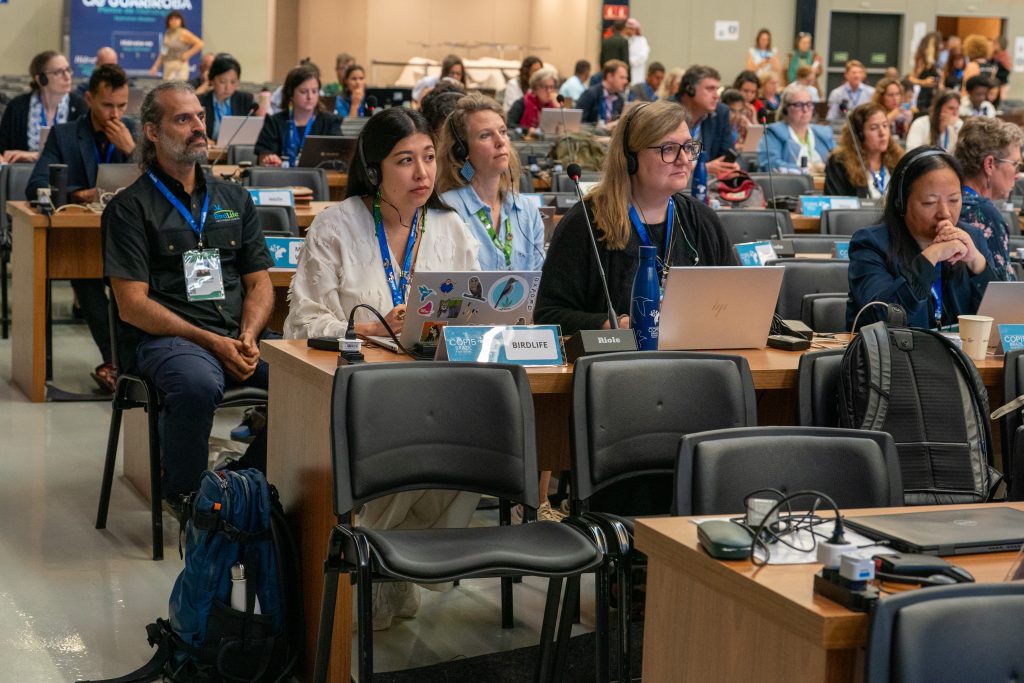
Major breakthroughs for migratory birds at CMS COP15
Governments took bold steps for migratory birds at CMS COP15 in Brazil. Delegates agreed on a new marine flyway framework and stronger protections for seabirds, raptors, and shorebirds.
Migratory birds connect our world. Crossing continents and oceans, they link ecosystems, cultures and communities, but they also reveal where nature is under pressure and where urgent action is needed.
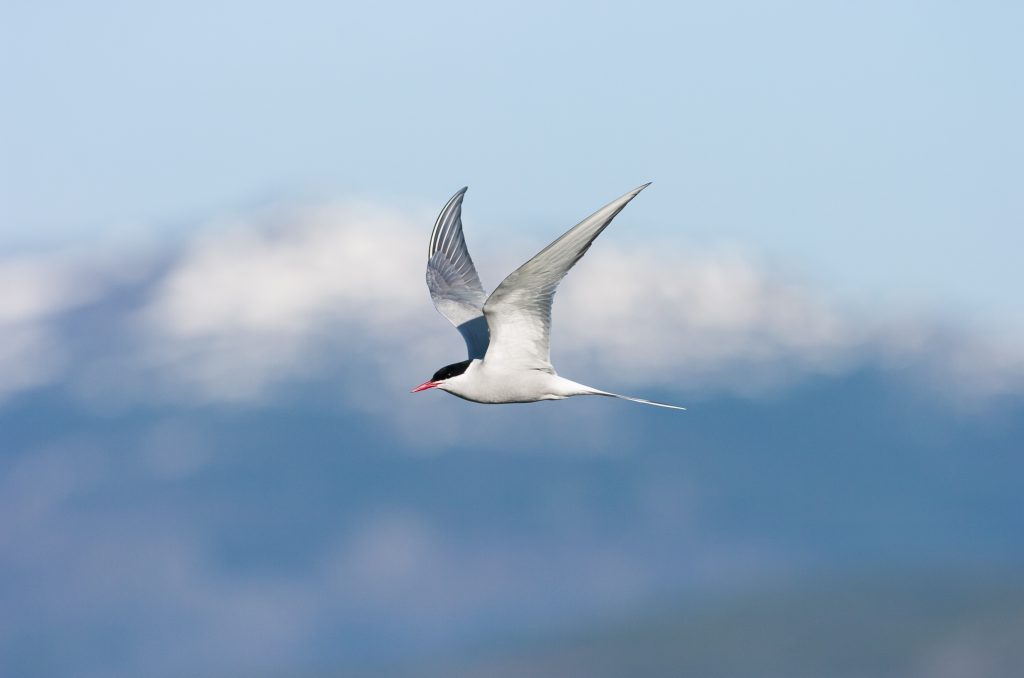
Header image: Arctic Tern, a species which holds the record for the longest migration of any animal. © Jukka Jantunen / Shutterstock
Against a backdrop of declining species and a narrowing window to meet global biodiversity targets, governments gathered in Campo Grande, Brazil, from 23 to 29 March 2026 for the 15th Conference of the Parties (COP15) to the Convention on Migratory Species (CMS).
As the only global treaty focused exclusively on migratory species, CMS plays a vital role in turning international commitments into action, supporting governments to protect species, restore habitats and maintain the ecological connections that migratory species depend on.
Our Partnership was strongly represented, with 38 delegates from across the world, including 19 national Partners, contributing expertise and supporting governments to deliver meaningful outcomes.
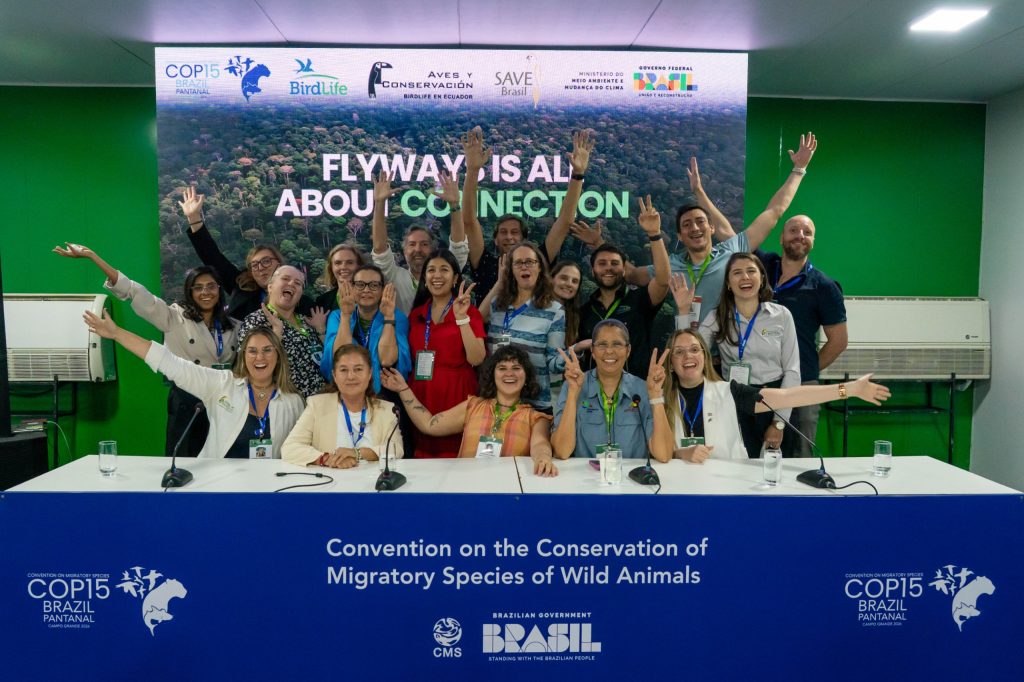
© Barend van Gemerden – BirdLife International
Marine Flyways: A major breakthrough in global ocean conservation
Oceans have long been a notable gap across recognised global flyways. In a landmark decision, governments formally recognised marine flyways for the first time at COP15. Scientists describe this as one of the most significant advances in ocean conservation in a generation.
Marine flyways now provide a structure for countries and stakeholders to coordinate priorities, mobilise finance and deliver action.
“Protecting migratory species takes more than a village. It was great to see the global conservation community come together at COP15 and take historic decisions for migratory birds across flyways. This is the kind of leadership we need now more than ever.”
Nina Mikander
Global Director of Policy and Business –BirdLife International
This new framework not only benefits seabirds but also other migratory marine megafauna such as whales, sharks and turtles. As seabirds are powerful indicators of marine ecosystem health, this resolution will play a critical role in supporting governments to achieve global ocean targets, including those under the new High Seas Treaty.
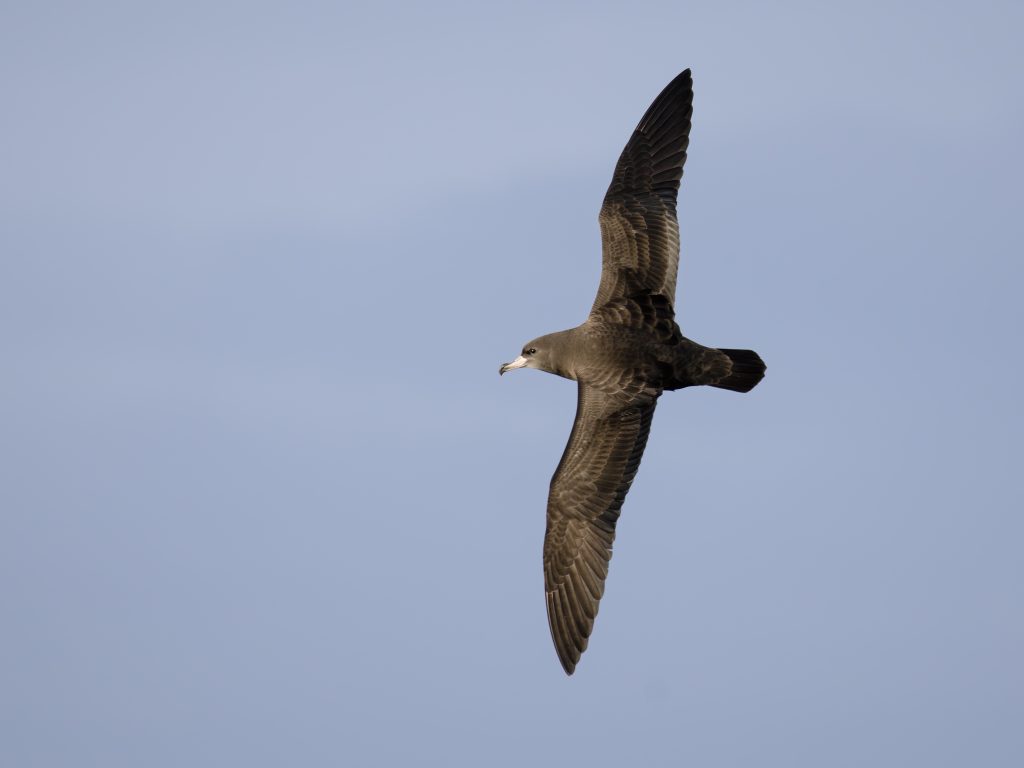
Efforts to strengthen marine flyway conservation were further reinforced through the listing of gadfly petrels and the Flesh-footed Shearwater on the CMS Appendices, alongside the adoption of concerted actions for the Flesh-footed Shearwater and Antipodean Albatross, developed with our support.
A breakthrough for the Americas: a new flyway initiative
COP15 marked a turning point for migratory species conservation across the Americas. Governments agreed to establish the CMS Initiative for the Americas Flyways, a dedicated mechanism to implement the Americas Flyways Framework and its Action Plan.
This represents a significant governance milestone. For the first time, the Americas Flyways will have a formal instrument to drive coordinated, cross-border conservation action. The groundwork was laid at the Third Meeting of the CMS Americas Flyways Task Force, held just before COP15, where we played an active role and offered support to governments over the next three years to help operationalise the initiative, together with the National Audubon Society.
“We must unite efforts with governments to ensure the effective conservation of migratory birds. By joining forces between governments and NGOs, we secure the habitats that migratory birds depend on.”
Ana Agreda
Conservation Project Coordinator – Aves y Conservación, BirdLife Partner in Ecuador
Strengthening conservation of raptors
COP15 delivered substantial progress for raptors. Parties agreed to establish Internationally Important Raptor Areas worldwide, listed the iconic Snowy Owl on Appendix II, and adopted a new Steppe Eagle Action Plan, as prepared by RSPB.
Governments also agreed to develop a multi-species Action Plan for Vultures in the Americas by COP16 in 2029, modelled on the successful African-Eurasian plan. In addition, COP15 strengthened the CMS mandate on restricting the veterinary use of Non-steroidal Anti-Inflammatory Drugs harmful to vultures and other raptors, with workshops agreed to support governments in implementing these measures.

A step forward for shorebirds
Three shorebird species of the Americas flyways, Hudsonian Whimbrel, Hudsonian Godwit and Lesser Yellowlegs, were added to CMS Appendix I, giving them the highest level of protection under the Convention.
The COP also noted the adoption by the East Asian–Australasian Flyway Partnership of the Spoon-billed Sandpiper Action Plan, developed with significant input from our team.
Aligning renewable energy development with migratory species conservation
There is growing recognition that poorly planned infrastructure can pose significant risks to migratory species. As a key cross-cutting theme at COP15, we contributed to these discussions through our coordination of the CMS Energy Task Force (ETF).
With our support, the Government of Brazil also demonstrated leadership by inviting countries from the Group of Latin America and the Caribbean to engage with the Task Force throughout the COP. This led to increased interest from multiple Parties and stakeholders in joining and contributing to the ETF, reinforcing its growing role as a key platform for aligning energy development with migratory species conservation.
What’s next
Migratory species are more than a conservation concern, they are a measure of how well the world is delivering for biodiversity. CMS is the primary treaty supporting governments to meet commitments on species conservation, ecological connectivity and sustainable use under the Kunming-Montreal Global Biodiversity Framework.
Yet with 2030 targets fast approaching, most governments are not on track. The latest interim State of the World’s Migratory Species report presents a stark warning: the situation has worsened even since COP14 just two years ago, with a growing proportion of CMS-listed species in population decline.
COP15 has provided a set of concrete, practical tools that governments can use to accelerate progress towards their KMGBF commitments. The real test now is implementation. BirdLife will be watching closely and pushing for action to ensure that the resolutions, decisions and action plans agreed in Campo Grande are delivered.
The trajectory can still be reversed, but only if governments and all stakeholders act with the urgency the evidence demands.