Migratory species connect our world, now we must act to protect them
In March 2026, governments from around the world will gather in Campo Grande, Brazil, for the 15th Conference of the Parties (COP15) to the Convention on Migratory Species (CMS). Taking place from 23–29 March, alongside a series of pre-COP meetings and events, this global summit comes at a critical moment for nature.
Migratory species are among the clearest symbols of how nature transcends borders. From seabirds crossing vast oceans to raptors soaring between continents, their survival depends on coordinated international action. Yet a new interim report showed that almost half of the world’s migratory species populations protected under CMS are now in decline.
With just five years remaining to deliver the Kunming-Montreal Global Biodiversity Framework (KMGBF), CMS COP15 is a vital opportunity to turn global ambition into practical action. As the only global treaty focused on migratory species, CMS plays a key role in helping governments translate high-level biodiversity commitments into targeted measures for species, habitats and ecological connectivity.
We will be at the heart of these discussions, working with governments and partners to help ensure that outcomes from COP15 drive meaningful conservation action on the ground.
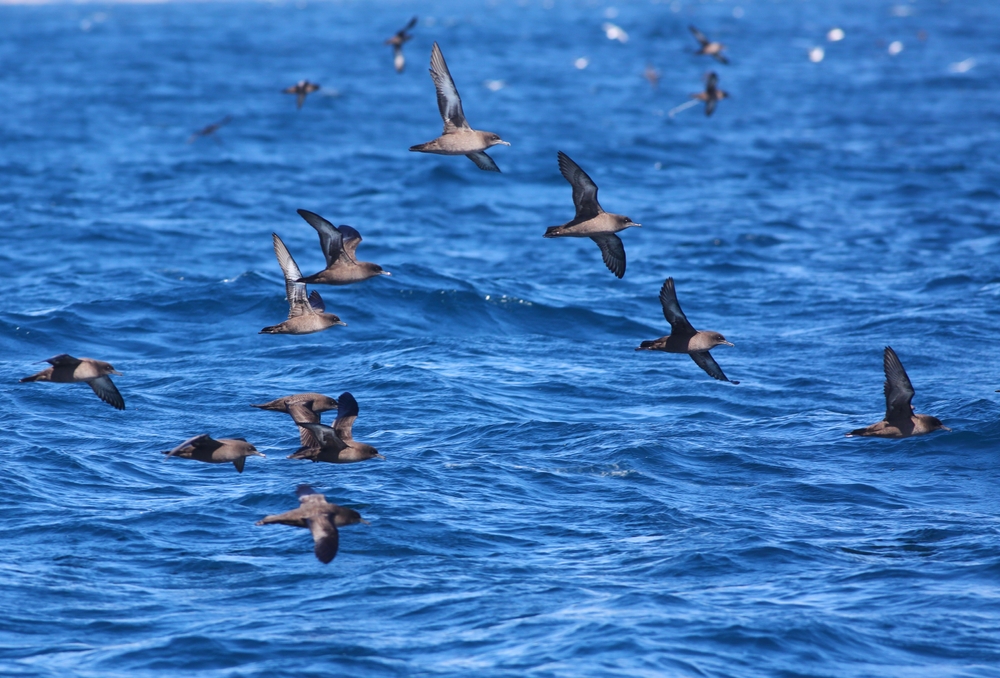
Header image: Sooty Shearwater. © Lei Zhu NZ, Shutterstock.

Turning global ambition into action for migratory birds
At COP15, we will focus on a set of priorities that reflect the most urgent threats facing migratory birds and the ecosystems they depend on, building on our Global Flyways Programme and long-standing engagement with CMS processes.
A central objective is the adoption of a new resolution on seabirds and marine flyways. Seabirds are among the most threatened groups of birds globally, facing pressures ranging from bycatch, pollution, climate change and habitat degradation. This new framework aims to strengthen coordinated conservation across the world’s marine flyways, filling a critical gap in current CMS efforts and supporting action for species that spend much of their lives on the high seas.
Alongside this, governments will consider proposals to strengthen legal protections for some of the world’s most threatened seabirds, including multiple species of gadfly petrels and the Flesh-footed Shearwater. If adopted, these listings would provide an important foundation for enhanced international cooperation and conservation action.
Flyway conservation will also be a major theme. Pre-COP discussions will help shape the future of the CMS Americas Flyways Framework, supporting stronger coordination across countries and laying the groundwork for more effective long-term governance and implementation.
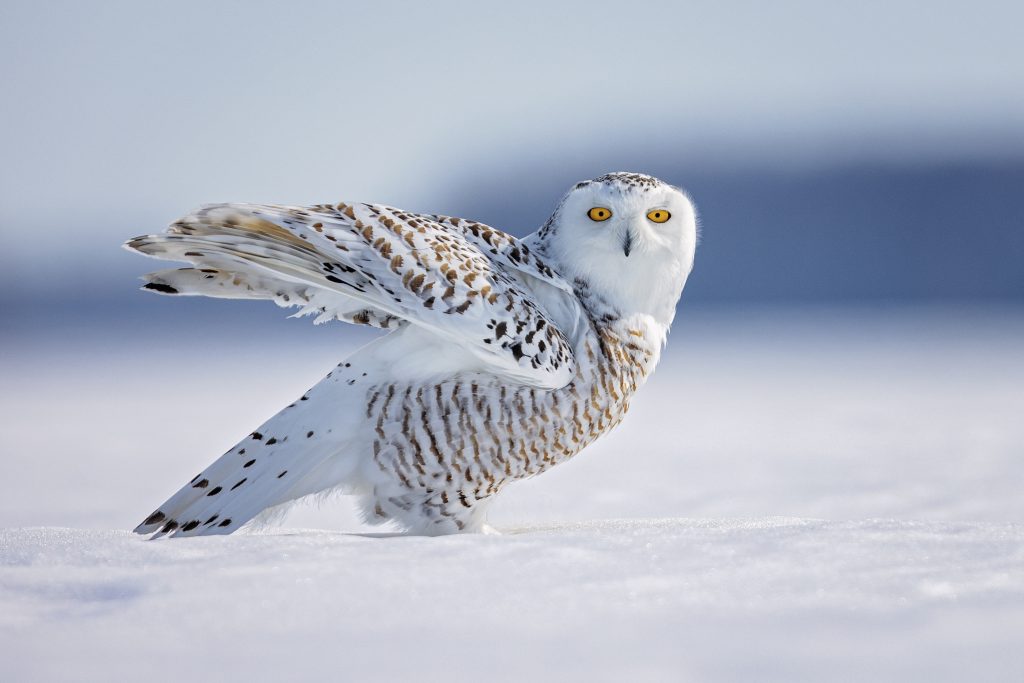
Raptors, another group facing significant pressures, will be high on the agenda. We will support measures to strengthen their conservation, including progress towards a multi-species action plan for vultures in the Americas, adoption of a new action plan for the Steppe Eagle, listing on the CMS Appendices of the Snowy Owl, and efforts to expand the concept of Internationally Important Raptor Areas to a global scale.
Together, these priorities reflect a broader goal: ensuring that CMS provides governments and other stakeholders with clear, practical tools to conserve migratory species and deliver on global biodiversity commitments.
A global Partnership driving action
Our presence at COP15 reflects the strength of our global Partnership, with around 40 delegates from across the world, including representatives from national Partners, many working directly with government delegations, we will play an active role throughout the negotiations.
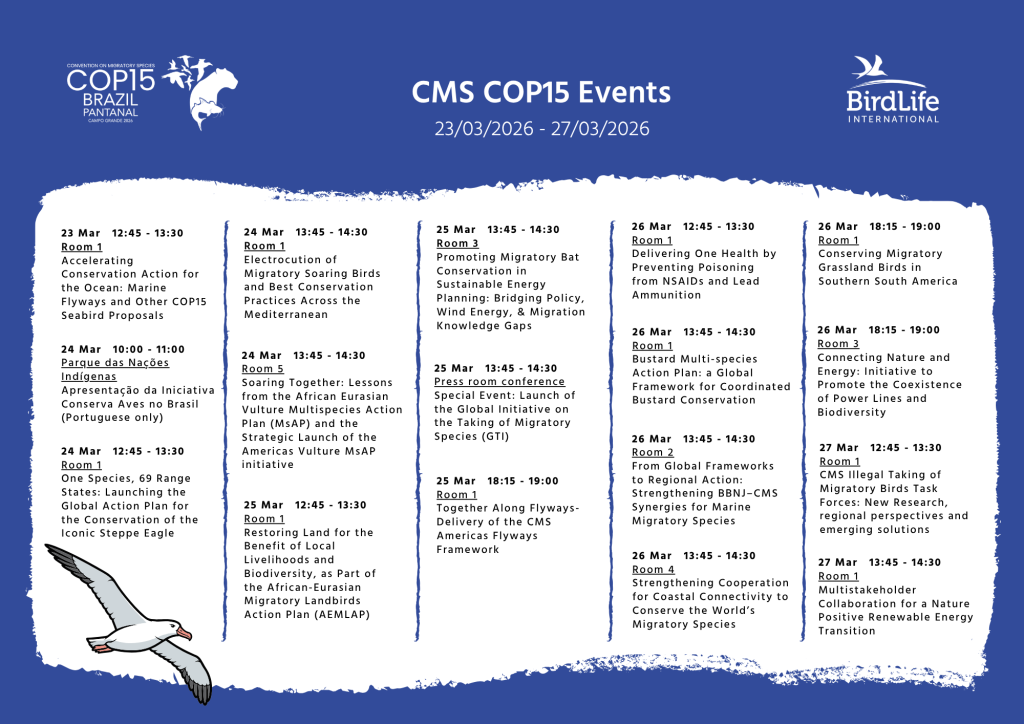
Together, with our 21 attending Partners we will contribute to discussions across multiple thematic areas and cross-cutting issues, while engaging in a wide range of official side events and meetings with governments, UN bodies and other stakeholders.
We are also working closely with the wider conservation community to help shape a strong and unified voice for civil society. This includes supporting the development of a joint NGO opening statement and participating in key pre-COP workshops and task force meetings focused on strengthening flyway conservation.
From global commitments to local impact
While global agreements are essential, their success ultimately depends on implementation on the ground. Across the BirdLife Partnership, work is already underway to turn international commitments into tangible conservation action.
In Uruguay, for example, BirdLife Partner Aves Uruguay is working closely with government and local communities to protect vital grassland habitats for migratory birds. Through the “Grassland Alliance Initiative”, the organisation promotes sustainable land use practices among ranchers, combining conservation incentives with livelihood support.
Importantly, the initiative also fosters the inclusion of women and youth, strengthening social resilience and intergenerational continuity in conservation practices. This work demonstrates how global frameworks like CMS can translate into real benefits for both nature and people.
A decisive moment for nature
As governments gather in Brazil, the stakes could not be higher. Migratory species are declining, ecosystems are under pressure and the 2030 deadline for global biodiversity targets is fast approaching.
CMS COP15 offers a critical opportunity to change course.
Success will ultimately be measured not by the words agreed in meeting rooms, but by the recovery of species in the wild. Migratory birds are powerful indicators of the health of our planet and of our ability to work together across borders.