Celebrating our women in science (Part 1)
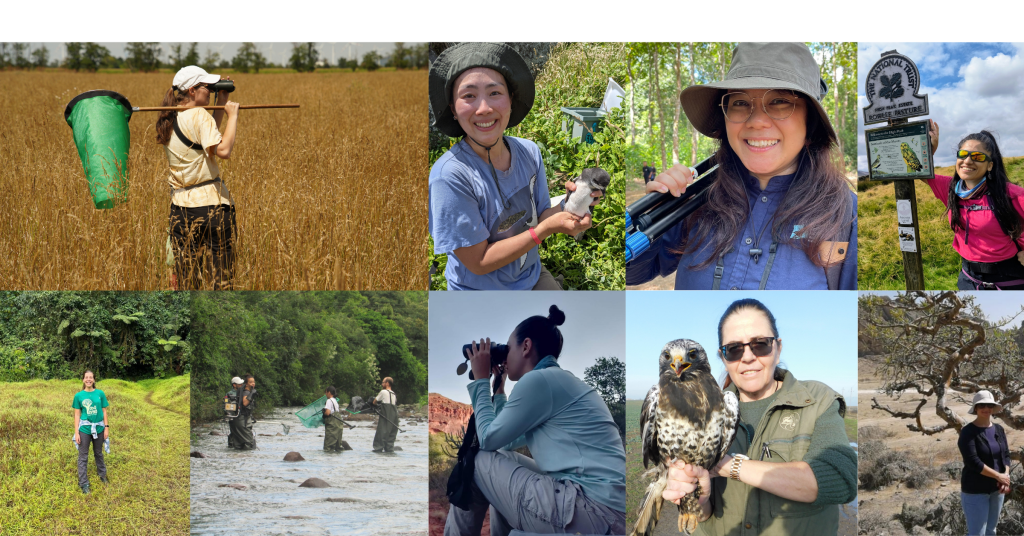
This International Day of Women and Girls in Science, read on to discover the stories of women in science across our Partnership.
Today, and every day, we celebrate the incredible women in science across the BirdLife Partnership: within our 124 Partners in 119 countries, and our Global Team.
We need more diverse voices from women with different backgrounds and experiences in the field of science. Their perspectives, determination and actions are critical in creating sustainable solutions to help tackle biodiversity loss and climate change, so birds and all life thrive.
Women and girls in science should be empowered, treated equally in often male-dominated sectors, and given opportunities to lead vital research.
Nominated by their colleagues for inspiring them, we explore the stories of several women across the regions who have paved the way for future generations. Together, they dive into the challenges they’ve faced and their shared passion for the conservation of nature.
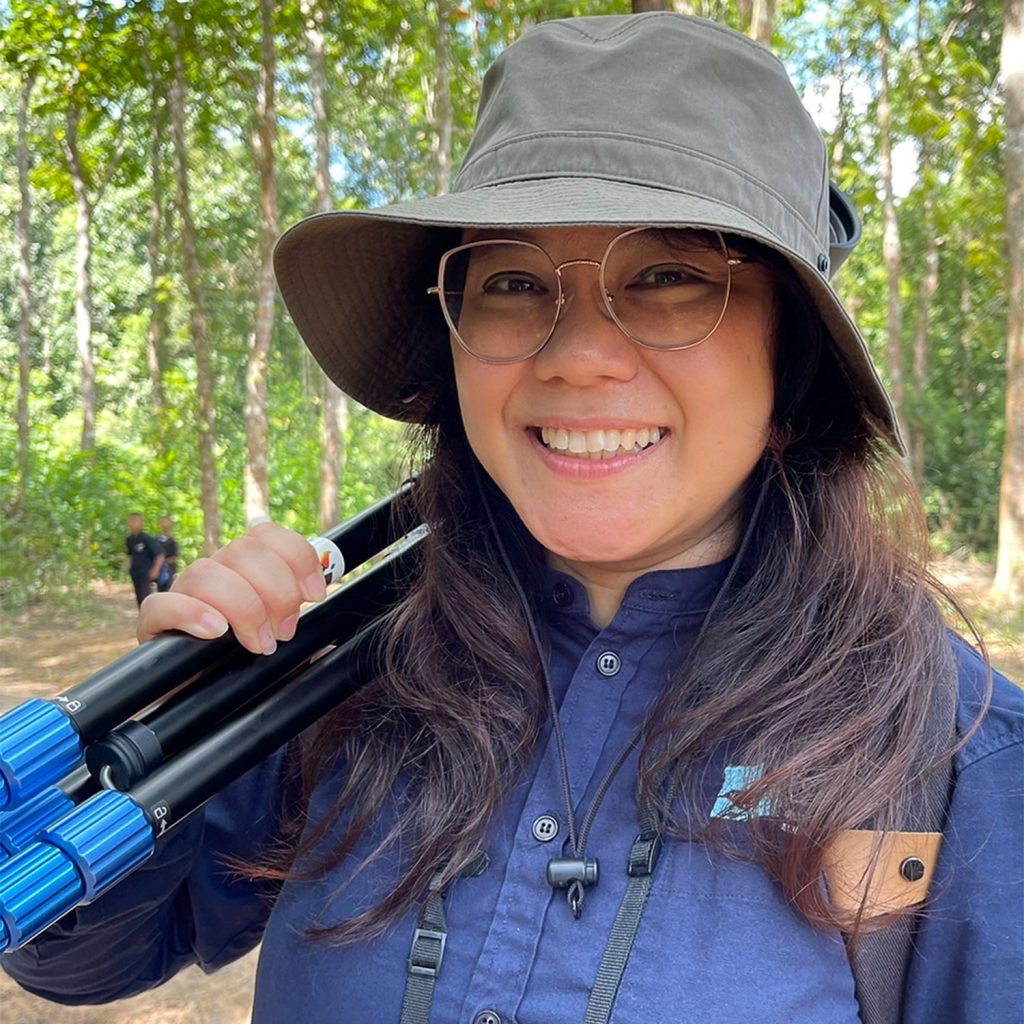
Khwankhao (Kimmim) Sinhaseni – Bird Conservation Society of Thailand
“I developed a deep love for nature from a young age and studied ecology because I wanted to understand natural systems and our role amongst nature. Through scientific research, I realised the importance of data to inform conservation decisions and translate knowledge into practical management strategies that protect biodiversity.
Conservation isn’t a sprint, but a marathon. I’ve worked hard to achieve goals and create impact, often forgetting to care for my own physical and mental well-being. Conservation work involves many uncontrollable factors; therefore, success depends on collaboration, strong networks, and collective action.
As a woman in science, mental strength is our greatest advantage, with qualities such as patience, curiosity, and resilience. If I was to offer advice, I’d say to stay committed, keep learning, don’t fear being challenged and be proud of your work.”
As a woman in science, mental strength is our greatest advantage, with qualities such as patience, curiosity, and resilience.
– Khwankhao (Kimmim) Sinhaseni
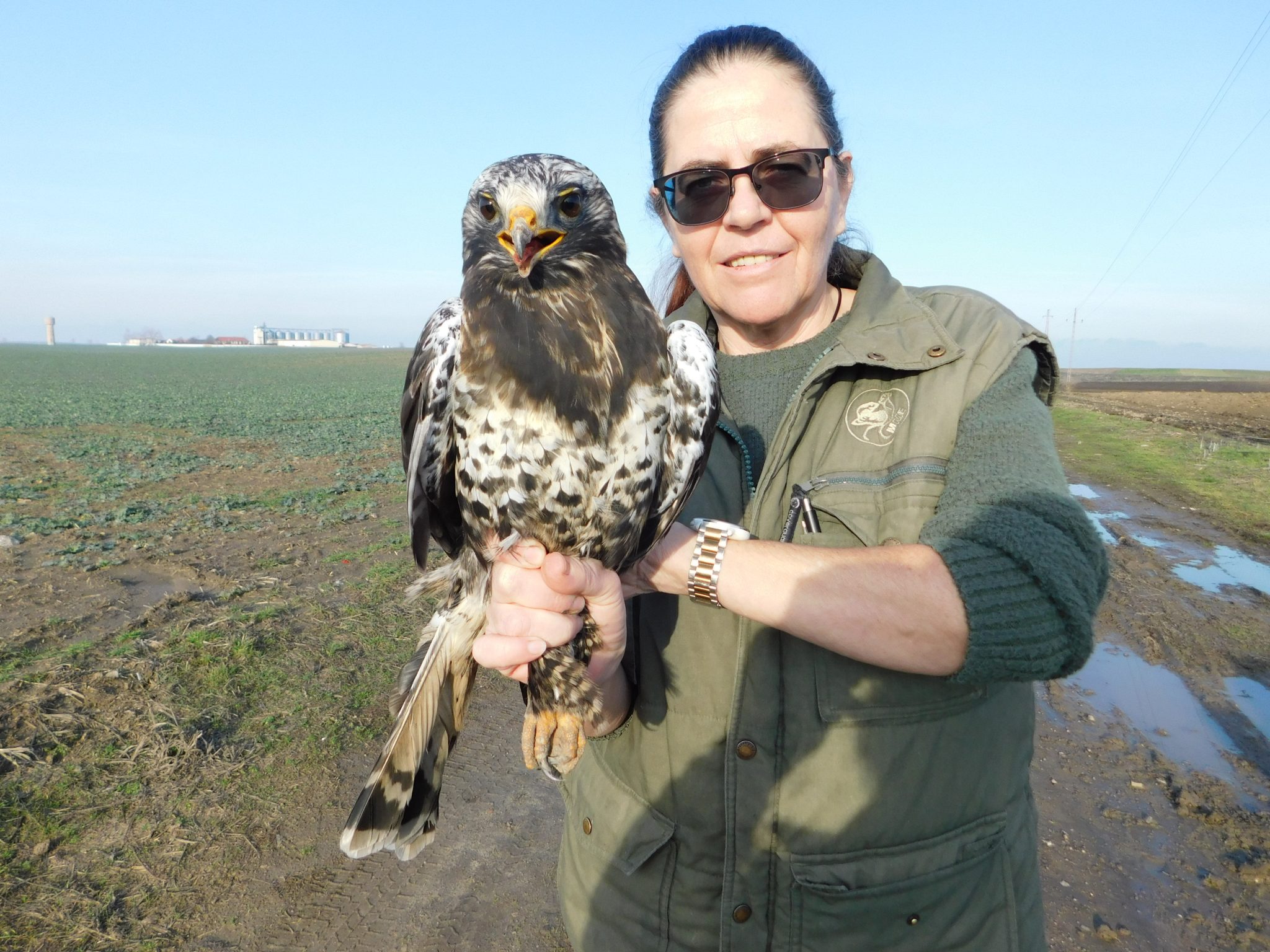
Bird research is more than a hobby; it’s my devotion for life.
– Enikő Anna Tamas
Prof Dr Enikő Anna Tamas – Magyar Madártani és Természetvédelmi Egyesület (MME), Hungary
“I’ve been involved in bird research for more than 30 years, studying a PhD in Conservation Biology, and am now a full-time university professor. I’ve also been a member of MME/BirdLife Hungary since 1995, both on their Board of the Raptor Conservation Group and volunteering as a bird ringer and birdwatcher. I consider myself a reed passerine, Black Stork and raptor specialist with wide international experience, mostly in migration research and monitoring.
I’ve participated in the ringing and tagging of birds of prey for habitat use and migration studies. I’ve also analysed trends, assessed habitat preferences, and made suggestions based on data for Western Marsh-harriers, Black Kites and White-tailed Sea-eagles. Recently in Hungary, I tagged and tracked European Honey-buzzards for various projects.
My bird research activities have yielded numerous international and Hungarian scientific publications, and I volunteer to train the new generation of bird ringers in the field. Bird research is more than a hobby; it’s my devotion for life.”
Dr Larissa Biasotto – BirdLife International
“When I was a kid, birdwatching was part of my everyday life in Brazil, observing colourful birds in the Atlantic Forest. I’ve always been curious and deeply connected to nature, especially birds.
As a biologist, understanding the challenges that energy expansion poses to bird conservation is central to my work, as balancing renewable energy growth with biodiversity protection is a key environmental issue of our time. It’s a privilege to work on applying this knowledge across different countries and contexts.
Throughout my career, I’ve faced challenges due to gender, nationality, language barriers, and being in the field alone. These obstacles strengthened my determination to claim my place, and I became a scientist committed to bird conservation and working at an incredible institution.
My main advice to girls wishing to pursue a scientific career is to connect with other women and recognise their place in the world. Building relationships beyond specific social, cultural, or geographic contexts is also essential.”
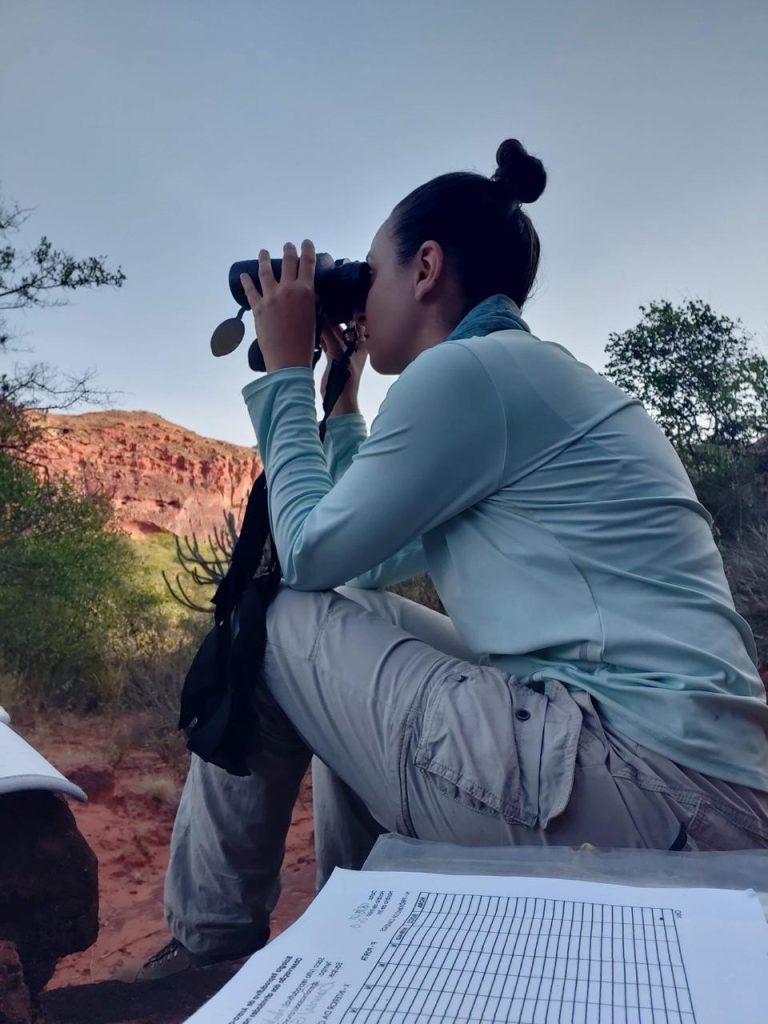
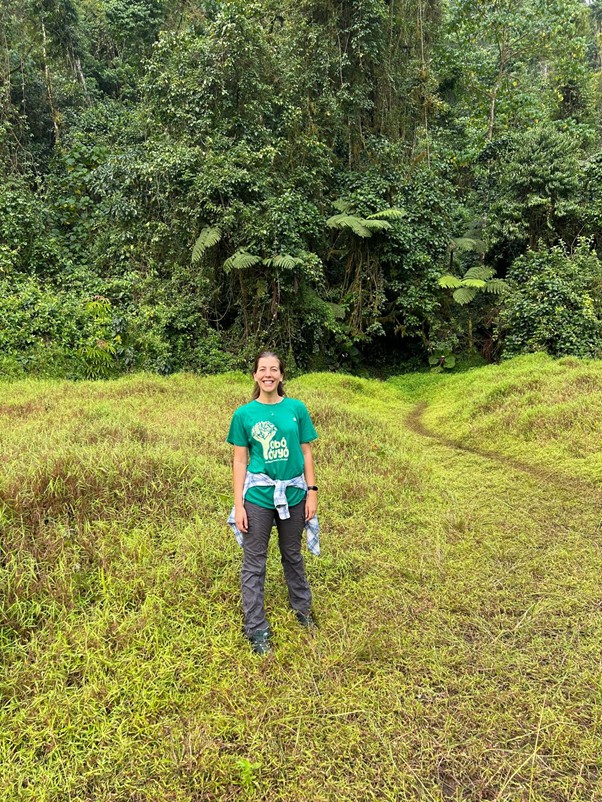
We need to create a space in science where women believe they belong and their perspectives matter. We need diverse voices.
– Joana Gomes Pereira
Joana Gomes Pereira – BirdLife International, São Tomé and Príncipe
“My lifelong sense of wonder for the natural world and for animals has driven me to understand them more deeply. I’ve studied the smallest bumblebees to chimpanzees. Today, that path has led me to the ‘Galápagos of Africa’ – the islands of São Tomé and Príncipe – where I work alongside an amazing team to conserve the unique and endemic fauna.
Along this journey, I’ve doubted my abilities and have experienced the too-familiar impostor syndrome. I’ve also struggled with scientific publications and communication being prioritised within academic circles, rather than engaging society or resolving local to global challenges. But change is underway and scientific environments are gradually opening, collaborating with private companies, NGOs, governments, and civil societies more often.
Unfortunately, research teams still lack women in leadership roles, and we often feel we must prove ourselves to male scientists. Conducting fieldwork in rural or remote areas brings additional challenges and, at times, safety concerns. We need to create a space in science where women believe they belong and their perspectives matter. We need diverse voices. Science should be accessible to everyone and a shared process that reflects the many ways of knowing, observing, and understanding the world.
I believe in the power of small, positive actions: they multiply and spread, until they become a collective force for change. My advice to girls looking towards a career in science is to trust yourself and know there is a place for you.”