Reviving the Melakore estuary in Guinea
Seventy-three kilometers from the city of Forécariah, in southwestern Guinea, lies Benty, at the confluence of the Melakore River and the Atlantic Ocean. This is where a discreet, vast, and fragile territory is located: the Melakore estuary.
By Aliou Diallo
Listed as a Ramsar site since 2006, this unique ecosystem is home to more than 311 species, including 105 plant species, 13 mammal species, and 90 bird species, including African grey parrot (Psittacus erithacus) and Hooded vulture (Necrosyrtes monachus). In addition, local communities depend on the region for natural resources such as mangroves, fish, salt, and agricultural land for their livelihoods.
However, the region is now under pressure from human activities, including hunting, mining, agricultural development, and logging, among others. Since May 2024, BirdLife partner, Guinée-Ecologie, with support 4yrfrom the PRCM, has been running a 18-month pilot project in the area. The Melakore Action Plan project aims to protect biodiversity and the environment while improving the livelihoods of communities.
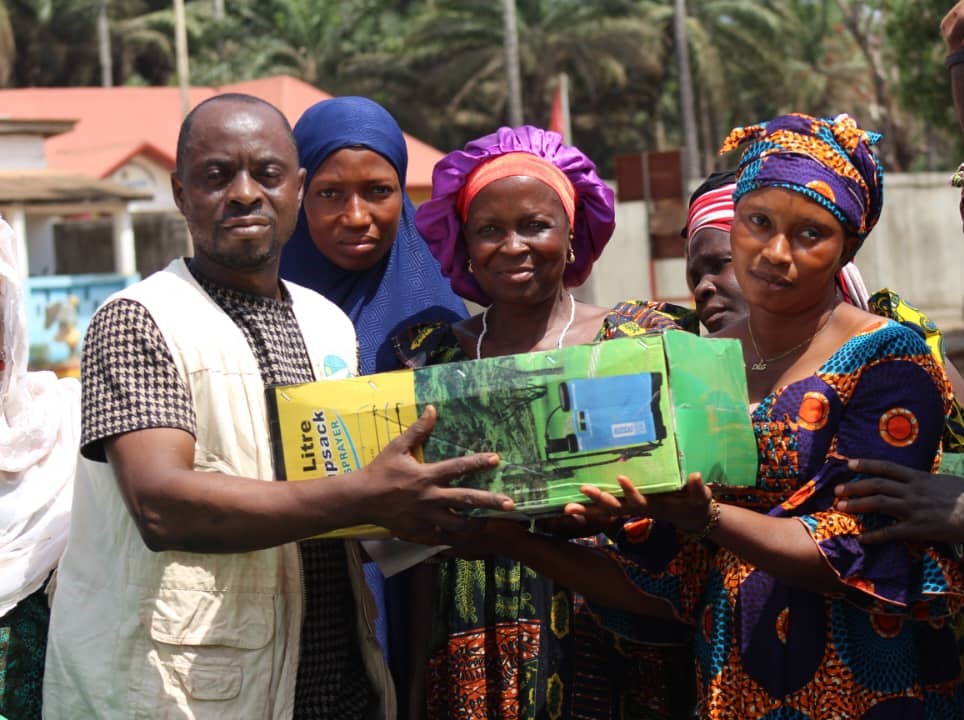
The project focuses on supporting communities in income-generating activities to reduce pressure on the mangrove, through various activities including , building improved ovens for smoking fish, providing local groups with work equipment, particularly salt production equipment, market gardening equipment, and agricultural inputs. In addition, it also focusses on developing a business plan for the groups and a plan for the development and management of the Mélakoré estuary.
Sustainable salt farming for communities
In Kaléyiré and Bouramaya, salt farming is a pillar of the local economy. The project has improved yields through the distribution of solar covers, basins, and adapted tools.
“Before, I only produced 30 bags of salt, but thanks to the covers we were provided with, I was able to produce 50 this year,” explains Bangaly Bangoura. “What Guinée-Ecologie has done for us is remarkable. Their support has demonstrated their commitment to the communities,” adds Daouda Yansané, president of Bouramaya district.
” We are very happy with the assistance we have received from Guinée-Ecologie. This year, we have received significant support. The market gardening, salt farming, and fish smoking groups have all been equipped with materials, which has enabled us to increase our salt production compared to previous years,” explains M’mah Camara, president of the Bouramaya women salt farmers Group.
Market gardening, a driver of economic and social resilience
In Malguiagbé, Palatoukou, N’Karakonnet, and Benty Centre, 10 market gardening groups were supported with equipment, seeds, fertilizers, and tools to improve agricultural production.
“We received everything we needed: seeds, fertilizer, tools. This has enabled us to improve our production. Guinée-Ecologie has really helped us,” says Yarie Camara, president of the Limaniya Women group. Alongside these women, the men are also committed to good practices. “This project is a real boost. We are proud to be part of it and we are committed to continuing our efforts,” said Ibrahima Cisco Camara.
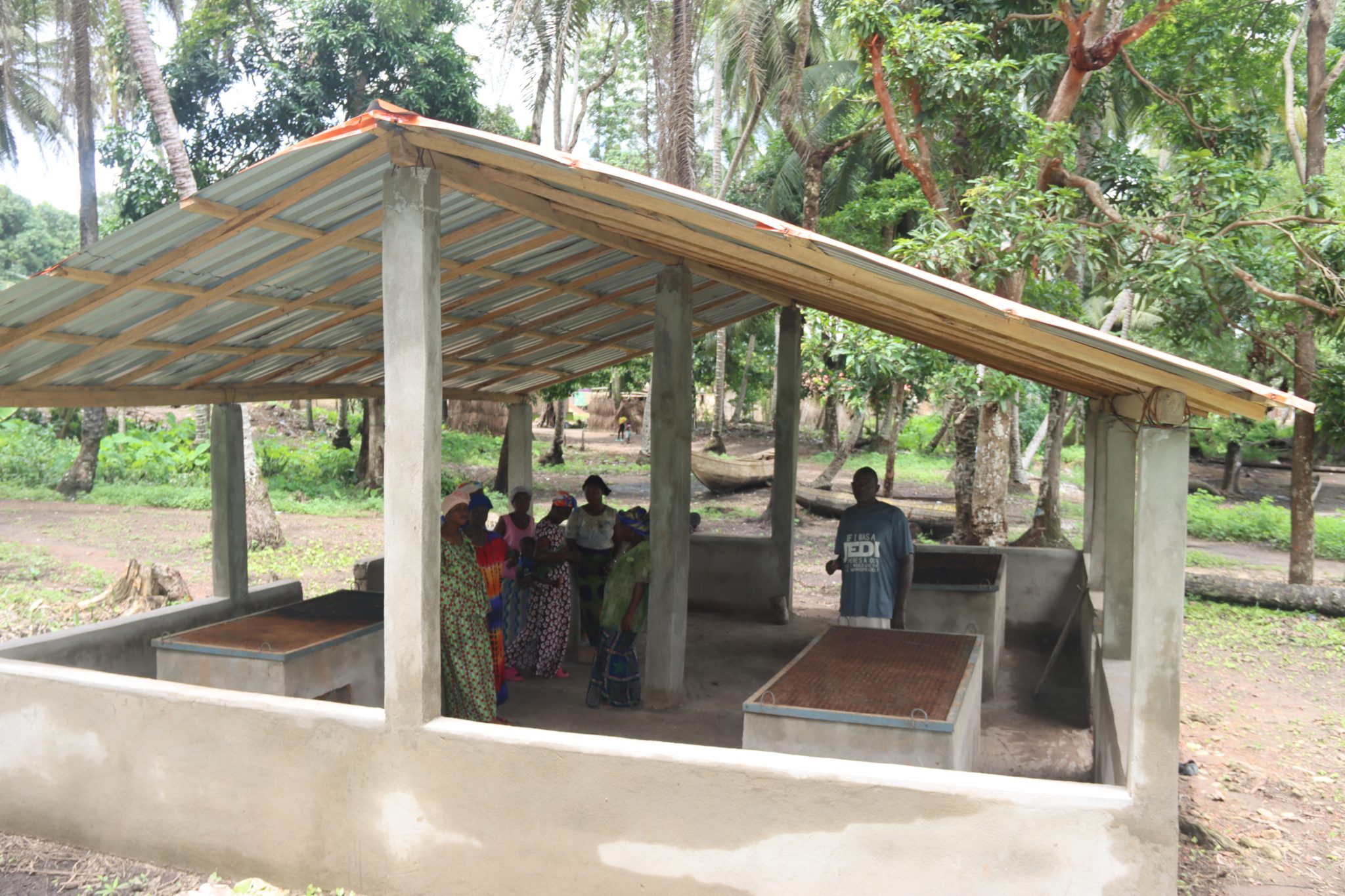
In Mélakoré, fish can now be smoked without destroying the mangroves. In the past, smoking fish meant cutting down mangroves: three kilograms of wood for one kilogram of smoked fish, an ecologically unsustainable cycle. Thanks to the introduction of improved ovens and awareness campaigns, habits are changing. “This oven is very useful to us. Today, all the fishermen come here to smoke their fish. Before, everyone would leave with their fresh fish for other villages, which wasn’t easy.” says Aminata Sylla, president of the women of Forodougou.
Business plans to structure the groups’ efforts
Five groups in particular, Samato, Mamadouba Sankon, Folokhono, Limaniya, and Saboufanyi, have benefited from the development of structured business plans that
integrate both economic profitability and environmental resilience. “We have incorporated sustainable agricultural practices that are adapted to local realities.
This helps to preserve resources while strengthening the economic capacities of the groups. It’s a positive dynamic that reinforces the collaborative management of the estuary,” explains Mr. Mara, project consultant. A total of 155 community group members have benefited from the business plan.
A sustainable future is taking shape, with and for the communities
Guinée-Ecologie ‘s support is widely praised. However, beneficiaries have expressed their desire to see these actions continue and expand. “What they have done is very good. We hope they will continue to support us. We are ready to work even harder,” said Momo Tony Sankhon, president of the Mamadouba Sankhon group.
Community consultation as part of the development of the Mélakoré Land Use and Management Plan.
As part of the participatory process of developing the Mélakoré Landscape Management and Development Plan (PAG), a broad community consultation was
organized to actively involve local populations in defining priorities for the sustainable management of their natural resources. This inclusive approach made it possible to gather the perceptions, concerns, and proposals of the various stakeholders.
“Mélakoré is much more than an estuary. It is a vital ecosystem, a foundation for community resilience, and a hope for sustainable development. Thanks to the
combined efforts of Guinée-Ecologie, the PRCM, the Guinean Office of National Parks and Wildlife Reserves (OGPRNF – Office Guinéen des Parcs Nationaux et Réserves de Faune), and local communities, a transition is underway toward a greener, fairer, and more responsible future. The Mélakoré estuary is being reborn, with and for its communities, concludes Roger Dore, Mélakoré project manager,
Delivery of project equipment © Guinée-Ecologie


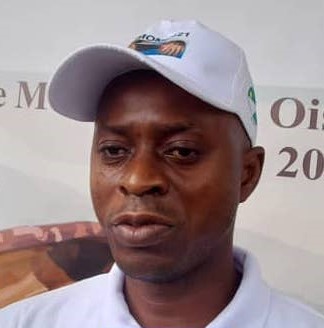
“Mélakoré is much more than an estuary.
It is a vital ecosystem, a foundation for
community resilience, and a hope for
sustainable development.Roger Dore, Project Manager, Guinée-Ecologie




This project is a real boost. We are proud to be part of it and we are committed to continuing our efforts.
Ibrahima Cisco Camara, Community member