Celebrating 60 years of waterbird monitoring for conservation!

This month marks the 60th International Waterbird Census (IWC), one of the world’s longest-running site-based bird monitoring programmes. This collaborative global effort continues to generate essential data that underpins effective conservation around the world.
Every January, thousands of people make their way to their local wetlands to participate in a massive citizen science project to inform global conservation efforts.
For the last 60 years the International Waterbird Census has run annually at wetland sites around the globe, to assess the health of waterbird populations and their wetland homes.
Co-ordinated by Wetlands International, the Census now covers many thousands of sites in 189 countries and territories across continents, including inland and coastal wetlands. In many countries, BirdLife Partners coordinate these surveys nationally, also train and support observers, manage and submit data, and liaise closely with national authorities and other stakeholders.
“BirdLife International salutes the 60th edition of the International Waterbird Census to be held this month and next. The most effective conservation is targeted where the need is greatest and the IWC is a great tool to do just that,” said Martin Harper, CEO of BirdLife International.
“Whether it’s having helped establish 956 Ramsar Wetlands of International Importance, covering 1.5 million km² or identifying 2,701 Important Bird Areas, covering 1.75 million km², the IWC consistently helps keep us on track so we can achieve results at scale,” added Harper.
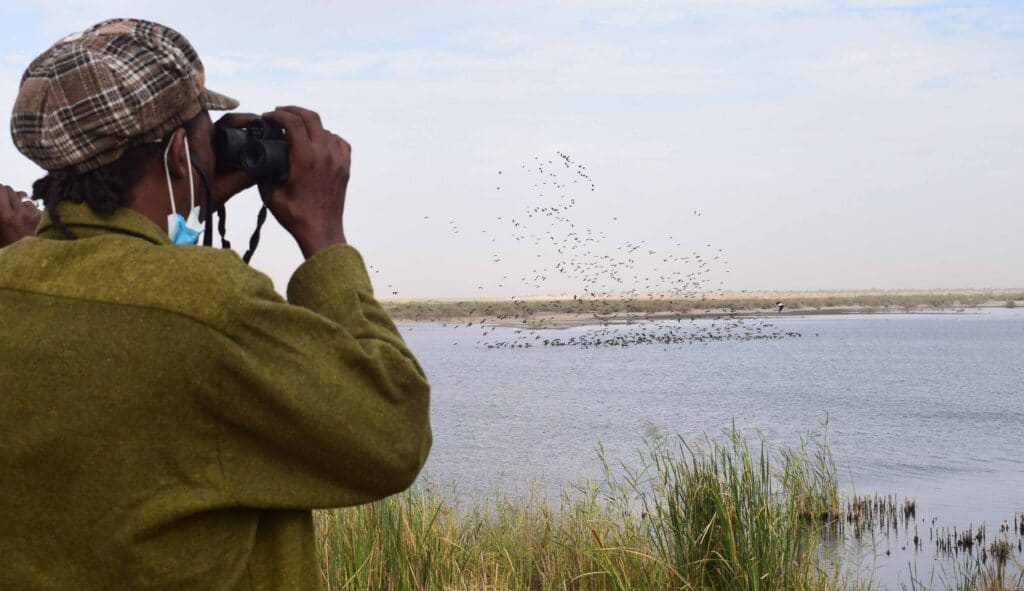
Header Image: Volunteers counting waterbirds at Barr ak Hikman, Oman – a wetland of global importance and a crucial migratory stopover. © Taej Mundkur
Why IWC matters
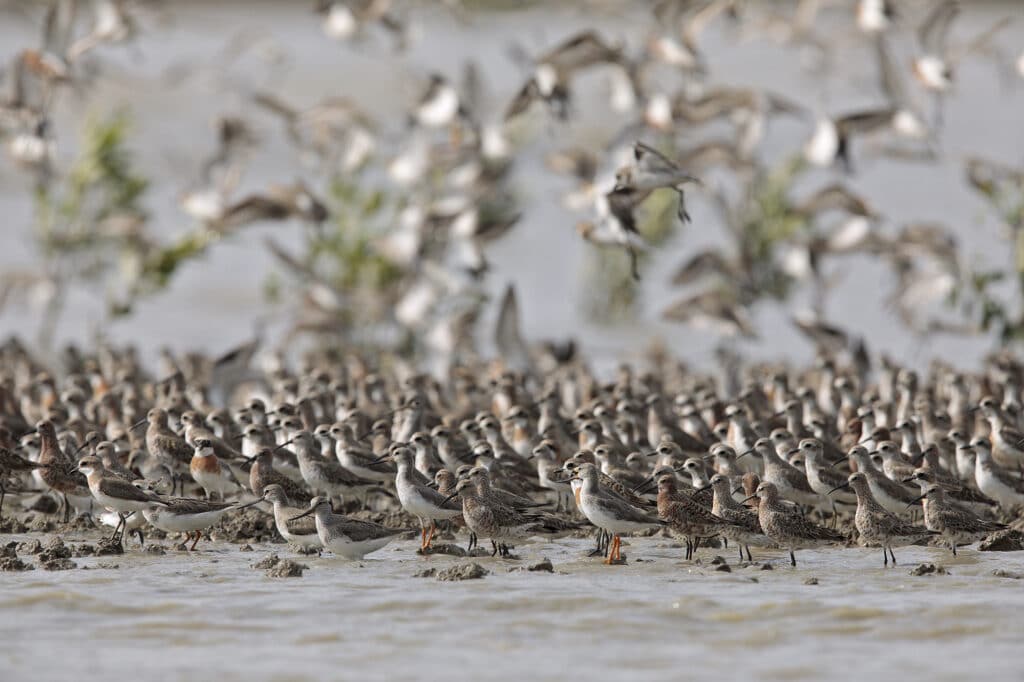
The International Waterbird Census plays a critical role in understanding and conserving waterbird populations worldwide. By generating population estimates and long-term trends for waterbird species, IWC data informs national conservation planning and environmental reporting, and underpins the identification and monitoring of Important Bird and Biodiversity Areas (IBAs) and Key Biodiversity Areas (KBAs). The data also provides essential evidence for international assessments and flyway-scale conservation planning, helping to guide coordinated conservation action across borders.
In many countries, IWC data represents the primary—or in some cases the only—long-term dataset on waterbirds. Beyond tracking numbers, the regular presence of observers at sites helps to detect local changes, offering early warning signs of emerging threats or shifts in site condition that may require conservation attention.
As Ian Burfield, Global Science Co-ordinator (Species) at BirdLife International, explains: “Around 8% of the world’s bird species are waterbirds, and for many of these the best available information on their population sizes and trends comes from the IWC. It therefore makes a huge contribution to our knowledge of the conservation status of waterbirds, including BirdLife’s assessments for the IUCN Red List.”
From field counts to global action
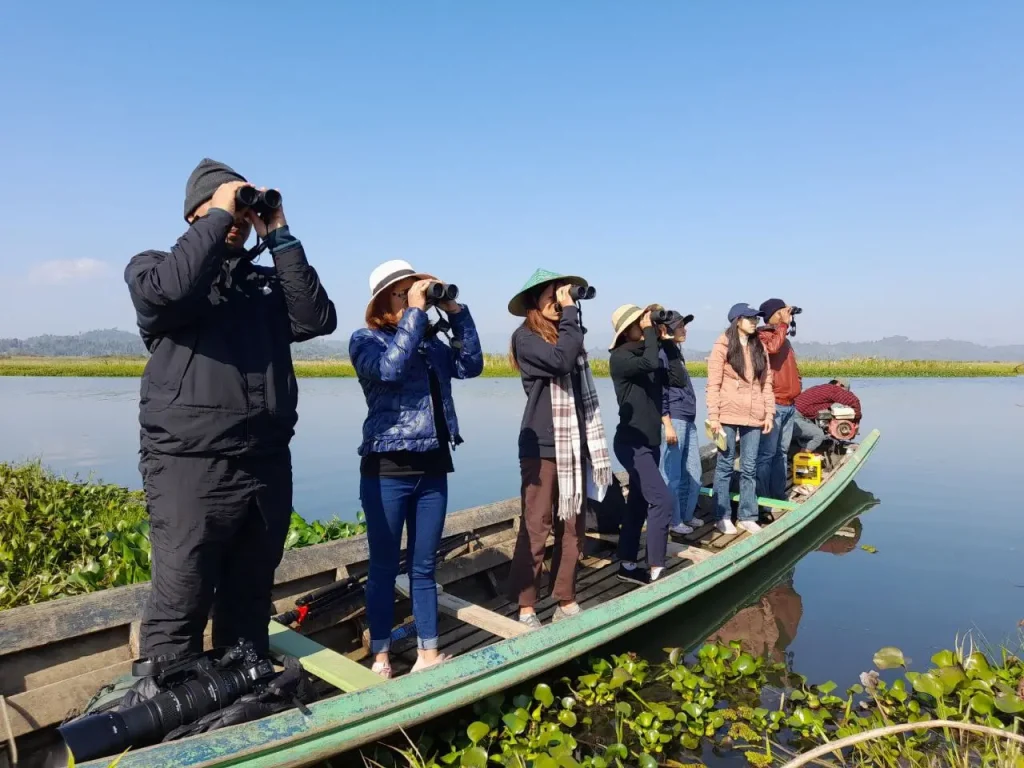
Each year, thousands of volunteers and professionals count waterbirds at wetlands around the world during the same census period. This data is collated nationally and then integrated internationally, while also remaining valuable at site scale, where it supports local monitoring, management and conservation action.
The long-term consistency of the International Waterbird Census allows site-level results to feed into regional, flyway-scale and global analyses. In this way, local field effort scales-up into robust datasets used by scientists, governments and conservation organisations worldwide. The strength of the IWC lies in this sustained participation over decades, which enables meaningful insights into change over time.
As Vicky Jones, Flyways Science Co-ordinator at BirdLife International, explains: “Effective monitoring underpins effective conservation, and the conservation of migratory waterbirds relies on many stakeholders cooperating at flyway scale. The IWC is vital in delivering information on the state of waterbirds and the sites they rely upon to these stakeholders – from site managers to national governments and international policy agreements.”

Our role in delivering IWC
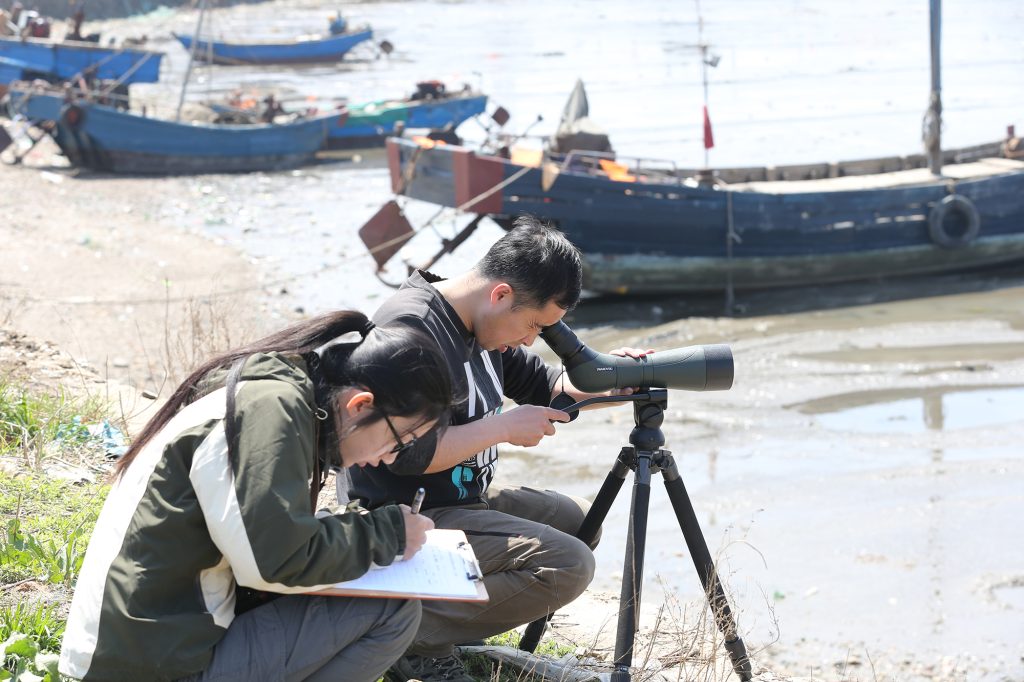
BirdLife Partners play an important role in delivering the International Waterbird Census in many countries, where they co-ordinate national IWC programmes as part of the wider international network led by Wetlands International. In this context, Partners organise field counts, train and support observers, manage and submit data, and liaise closely with national authorities and other stakeholders.
This contribution is reflected in the scale and impact of Partners’ efforts on the ground. For example, between 17-20 January 2025, a dedicated team of 36 volunteers from BirdLife Cyprus, working alongside their partners at KUŞKOR, surveyed 72 wetland sites across the island. This collaborative effort recorded 72 different waterbird species and counted a total of 21,592 individual birds, demonstrating how coordinated local action feeds into the global IWC dataset.
For many of our Partners, the IWC provides a key point of engagement with national governments, helping to strengthen relationships around biodiversity monitoring, wetland management and conservation policy. The programme exemplifies BirdLife’s Partnership model in action: strong local leadership and expertise, with volunteer networks contributing to global datasets and conservation outcomes. As a result, the IWC remains a flagship annual activity for many Partners, demonstrating the enduring value of long-term, collaborative monitoring.
IWC60 in a global context
The 60th anniversary of the International Waterbird Census comes at a moment of renewed global momentum and leadership for waterbird conservation. IWC60 coincides with the launch of the Global Waterbird Estimates Partnership (GWEP), announced at the 15th Conference of the Parties to the Ramsar Convention on Wetlands in July 2025. GWEP brings together a broad coalition of partners, including Wetlands International, BirdLife International, multilateral environmental agreements and governments, with support from Ramsar Contracting Parties. Together, these partners aim to strengthen and update global waterbird population estimates using the best available data.
The IWC is central to this effort. Its long-term, standardised data underpins Waterbird Population Estimates and inform the identification of Wetlands of International Importance (Ramsar Sites), providing a critical evidence base for identifying and safeguarding these vital wetlands. In particular, a wetland should be considered internationally important if it regularly supports 20,000 or more waterbirds (Criterion 5) or 1% of the individuals in a population of one species or subspecies of waterbird (Criterion 6). In this way, decades of consistent field monitoring continue to shape global conservation policy and practice.
Having this global dataset also facilitates collective action across other major flyway-scale initiatives with a focus on waterbirds, including the African–Eurasian Waterbird Monitoring Partnership, the Agreement on the Conservation of African-Eurasian Migratory Waterbirds (AEWA), and the East Asian–Australasian Flyway Partnership. Through these mechanisms, the IWC supports international cooperation, helping to ensure that migratory waterbirds and the sites they depend on are conserved throughout their flyways.
Looking ahead
Wetlands and waterbirds continue to face growing pressures around the world, from habitat loss to climate change. In this context, long-term monitoring remains essential for detecting change, identifying emerging threats, and guiding effective conservation action.
The BirdLife Partnership is committed to sustaining and strengthening the International Waterbird Census into the future, ensuring that this invaluable network of volunteers, scientists, NGOs and site managers continues to provide the evidence needed to protect waterbirds and the wetlands they depend on. IWC60 therefore represents not only a landmark milestone but also a renewed commitment to global collaboration and conservation impact for decades to come.