Bringing birds back: how NCE is mainstreaming Anti-IKB into Egypt’s national conservation agenda
Lake Nasser, one of the world’s largest man-made lakes, stretches nearly 500 kilometers across southern Egypt into Sudan.
By Mohamed Hussein & Nadia Sherif Abdulhamid
Created in the 1960s by the Aswan High Dam, its winding creeks (khors) and seasonal swamps provide rich breeding grounds for fish and critical feeding sites for migratory water birds. Recognized as an Important Bird and Biodiversity Area (IBA), the lake meets global conservation benchmarks hosting threatened species, sustaining over 1% of certain bird populations, and supporting more than 20,000 water birds annually.
Just last January, Nature Conservation Egypt recorded
around 15, 200 birds of more than 60 species throughout
parts of Lake Nasser, most notably Great Cormorant
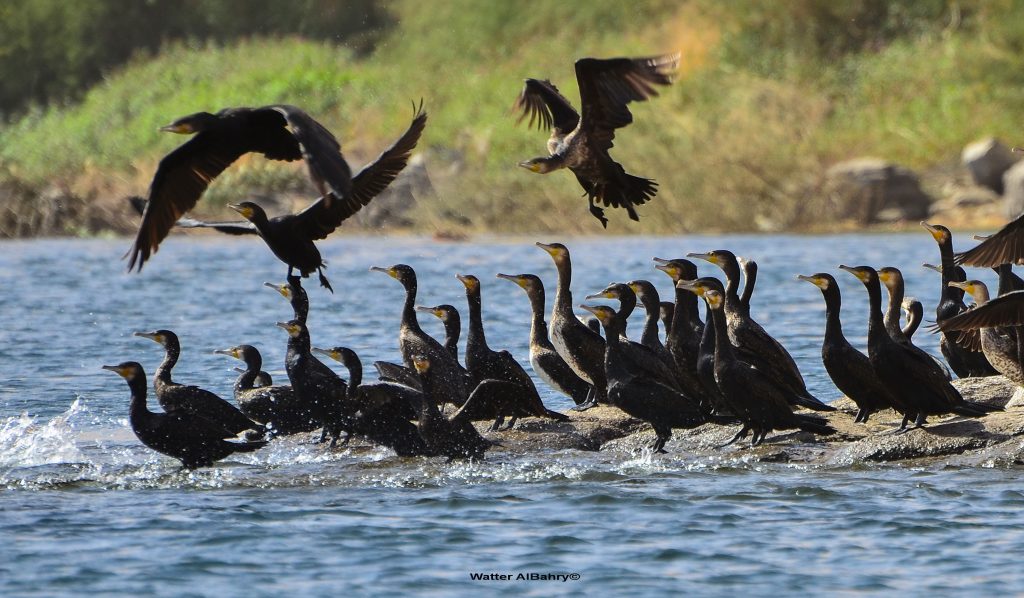
(Phalacrocorax carbo) (4231 cormorants), Eurasian Teal
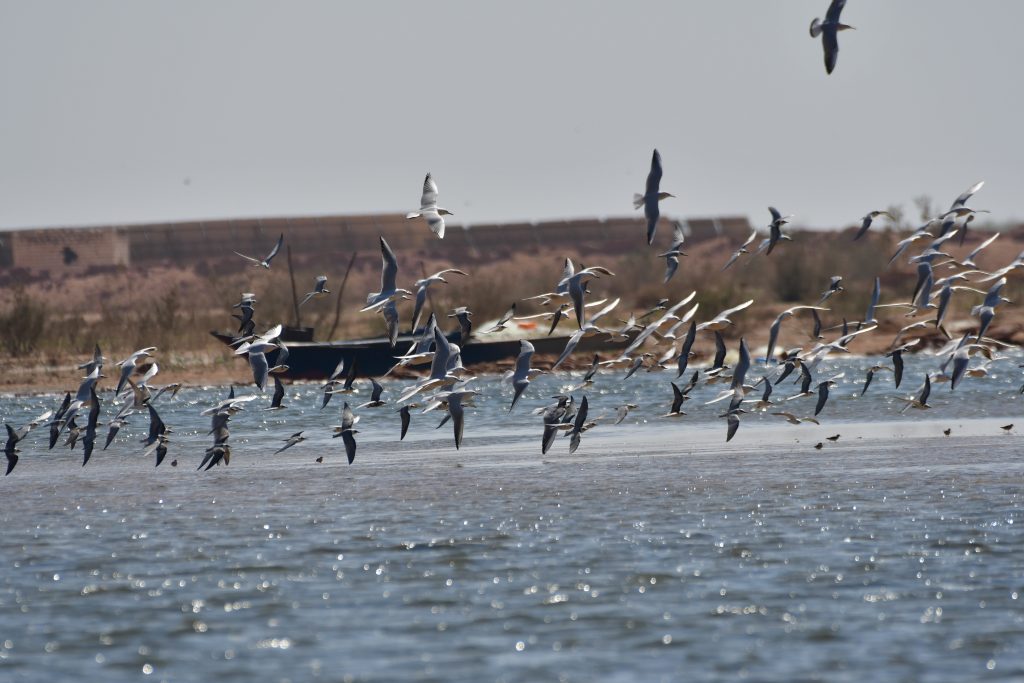
(Anas crecca) (1344 teals), Whiskered Tern (Chlidonias
hybrida) (713 terns), Little Stint (Calidris minuta) (677
stints), and Egyptian Goose (Alopochen aegyptiaca) (560 geese).
Yet, this ecological jewel has faced decades of pressure
from illegal hunting and overexploitation, turning it into
a hotspot for national and international hunting tourism.
During the hunting season of 2022 – 2023, Nature
Conservation Egypt recorded 78 foreign hunters across
15 trips, the average trip duration was 14 days. In
response, Nature Conservation Egypt (NCE) has stepped
forward as a national leader, embedding the fight
against Illegal Killing of Birds (IKB) into policy
frameworks and proving that conservation can be a
driver for both biodiversity protection and sustainable
development.
”In this context, we stress that the success of the hunting decree depends on strict enforcement and firm action against violations, especially given ongoing
documentation of large-scale illegal hunting of
passerines and other species not explicitly covered by
the decree, often shared openly on digital platforms.
Such practices undermine biodiversity and risk Egypt’s
credibility in upholding its international commitments”
says Mohamed Hussein, Energy Program Manager at
Nature Conservation Egypt (NCE)
Turning Advocacy into Action
Over the past four years, NCE has worked relentlessly to
position IKB as a national policy priority. This advocacy
culminated in 2023 when Egypt’s Ministry of
Environment issued a landmark decree banning bird
hunting in Lake Nasser—an unprecedented move after
decades of decline in bird populations. The decision was
backed by an NCE-led study, carried out with the Nature
Conservation Sector (NCS) and BirdLife Malta , which
documented the scale of IKB during the 2022–2023
season and provided irrefutable evidence for urgent
intervention. The hunting ban was extended into 2024–
2025, delivering immediate ecological dividends.
Biodiversity began to rebound, and for the first time,
Egypt recorded breeding colonies of the Village Weaver
(Ploceus cucullatus), a sub-Saharan species that had
never been documented breeding in the country before.
This success strengthened NCE’s case for further
extension of the ban into 2025–2026, ensuring that
conservation progress is not short-lived.
Aligning Conservation with Local Livelihoods
NCE recognizes that lasting conservation requires
economic solutions for local communities. In early 2025,
the organization organized high-level field visits to
Aswan and Lake Nasser, bringing together senior
officials from the Ministries of Environment and
Tourism, alongside local government leaders. The aim:
to promote birdwatching and ecotourism as viable,
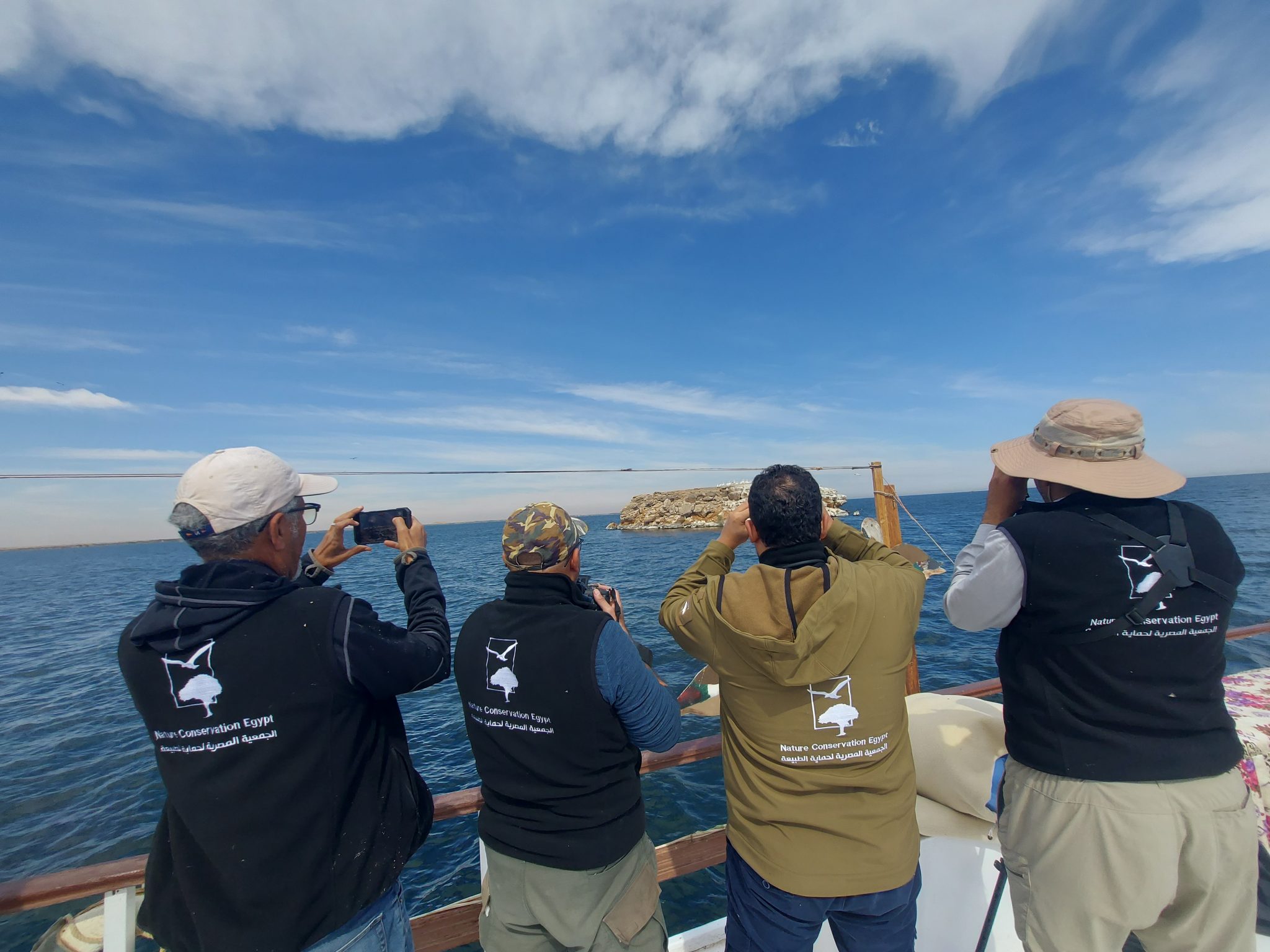
profitable alternatives to hunting. Four ex-hunting boat operators have been trained as birdwatching guides, creating new income streams while transforming them into active stewards of biodiversity. The annual Mid-Winter Water Birds Census, coordinated by NCE with community participation, has further cemented the role of local people in monitoring and protecting their natural resources, an approach that blends science, conservation, and livelihoods.
A Landmark Discovery
In 2025, NCE’s conservation efforts were rewarded with
a milestone scientific finding. A team led by Dr.
Haitham Mossad, working alongside German
ornithologists, documented Egypt’s first breeding
population of the Village Weaver in Aswan 15–20 pairs
building 63 nests between August 2024 and January. The discovery not only enriches Egypt’s avifaunal record but also underscores how quickly ecosystems can recover when given respite from exploitation.
Mobilizing Public Support: “So That the Birds Return”
Recognizing the power of public opinion, NCE launched
a nationwide media campaign in 2025 under the banner “So That the Birds Return.” With the message “The voice of nature is stronger than the echo of a gun,” the campaign galvanized online engagement and
brought environmental advocacy into mainstream
conversation.
A strategic partnership with the Society of Writers on
Environment and Development, the first Egyptian NGO
dedicated to environmental journalism, amplified the
message through an official launch at the Journalists
Syndicate in Cairo. Attended by the Syndicate’s
President, over 50 journalists, and key conservation
stakeholders, the event generated more than 60 media
features, live reports, and in-depth articles. This media wave not only called for extending the hunting ban but also explored expanding restrictions to other ecologically sensitive regions like the Western Desert oases.
”I am one of the boat owners whose boats were used by
the Maltese hunters who used to come for five months
each year to hunt birds. We were not happy about the
hunting they did, but it was our livelihood, and we
depended on it. After the hunting ban, we were greatly
affected by the loss of work. We invite bird lovers to
come and watch birds and support us. Nature
Conservation Egypt (NCE) has been very helpful, they
bring us work and contribute to the boat expenses as a
form of support. We hope birdwatchers continue to visit
and support us.” says Mohamed Sayed (Boatman and
owner).
From Crisis to Recovery
In just two years, Lake Nasser’s biodiversity has shown
signs of revival. Migratory and resident bird populations
are returning, new species are nesting, and community led ecotourism initiatives are gaining momentum. Still,
NCE warns that these gains remain vulnerable without
the continued enforcement of the hunting ban and the
political will to sustain it.
A Blueprint for the Future
Nature Conservation Egypt’s previous and ongoing work
at Lake Nasser demonstrates how science-based
advocacy, community engagement, and strategic media
mobilization can drive real policy change. By
collaborating with other organizations, government
bodies, and media workers (i.e. journalists,
photographers, cameramen, and tv show hosts) on their
national campaign “So that the birds return” NCE
reaffirms its commitment to safeguard Egypt’s natural
heritage for future generations.
By mainstreaming IKB into national strategies, fostering
sustainable livelihoods, and building strong alliances
between government, civil society, and the media, NCE is not only protecting Egypt’s avian heritage—it is setting a benchmark for integrated conservation in the region. As the organization pushes forward with its campaign for the 2025–2026 hunting ban extension, Lake Nasser stands as living proof that when nature is given a chance, it can and will return.
Great cormoran at Lake Nasser © NCE


“The success of the hunting decree depends on strict enforcement and firm action against violations, especially given ongoing.”
Mohamed Hussein, Energy Program Manager at
Nature Conservation Egypt (NCE)