Simplification or sabotage? EU’s nature agenda under pressure

We hope your summer was restful, filled with long walks in nature and a welcome break from Brussels politics. But the fires, heatwaves, and floods that ravaged Europe over summer were a stark reminder of the cost of ignoring the nature and climate crises.
And yet, while Europeans are facing these crises, the European Commission chose to launch a public consultation over summer, asking for input on how they could ‘simplify’ environmental rules. The very rules that protect us against these crises.
The response was clear. Within ten days, nearly 200,000 citizens spoke up to ask the Commission to keep their #handsoffnature and protect our vital nature laws instead of dismantling them.
Simplification, the EU’s new buzzword
Let’s pause a second on that word: ‘simplification’. This week, Commission President Ursula von der Leyen gave her annual State of the Union speech, where she sets out the EU’s priorities for the year ahead. And the word that popped up more than once? ‘Simplification.’
In short, the EU has promised to make its laws simpler and reduce red tape for businesses: for supposedly fewer administrative burdens, faster decisions, and clearer rules for companies. It might sound nice, even appealing. But in reality, it’s downright dangerous. Clear rules are crucial to protect people and nature, while providing businesses with the certainty they need. What harms everyone is unpredictability and an uneven playing field. Last months’ initiatives were not ‘simplification’, but a push for deregulation in disguise.
Want to know more? Our Head of Policy, Anouk Puymartin, explains everything in this video or check out our FAQ on this topic.
Now, let’s see what else is in store in the coming months.
Money, money, money
Summer started with the European Commission presenting how it’s planning to spend its budget over the next seven years. It falls short of what Europe urgently needs: strong dedicated funding for biodiversity and climate. Worse, it guts a cornerstone of EU nature funding: the LIFE programme, the flagship fund for conservation projects with real, measurable impact across Europe. The budget proposal will now be discussed by Member States and the European Parliament. And yes, we’ll be watching closely, pushing for public money to go where it matters most: tackling the ecological crisis. Because if we fail to invest in nature, the costs will be way higher.
No nature, no food
Alongside the budget, the Commission also set out its vision for agriculture beyond 2027. Agriculture is a major driver of biodiversity loss, so direction matters. The proposal misses the mark where it matters most. There’s no dedicated funding for biodiversity or climate resilience, the very foundations of a thriving farming future.
Meanwhile, Agriculture Commissioner Hansen is busy dismantling the current Common Agricultural Policy (CAP). His favourite word? You guessed it: ‘simplification’. Behind that label, he’s eroding protections for grasslands and peatlands and cutting transparency around EU funds. Hansen wants the new rules in place by 2026, and both the EU Council and Parliament are moving fast, largely ignoring the environmental impacts and long-term costs for farmers.
Burning forest (laws)
The EU Deforestation Regulation is also in the line of fire, threatened by the same ‘simplification’ excuse we’ve come to recognise. Originally adopted in June 2023 and set to apply from January 2025, the law faced severe push back from policy makers, who agreed to a last-minute implementation delay of one year. Member States are now taking advantage of this extra time, not only stalling implementation but actively discussing how to weaken key due diligence requirements.
The proposed Forest Monitoring Law aims to set mandatory rules for tracking and reporting on forest loss and degradation across the EU. But it has already been watered down by Member States so much that the Commission warned it might withdraw the proposal unless Parliament strengthens it. This look especially reckless after this summer’s destructive wildfires across southern Europe, which showed how fragile our forests are under climate stress.

Just keep swimming!
Big promises are on the horizon for Europe’s seas. The Ocean Pact makes its official entrance in the policy arena, and the next months will be confirming if it is followed by concrete action and dedicated funding to recover ocean health. The Commission also plans to roll out new guidelines to make fishing rules clearer and push fleets toward more sustainable practices. We will be watching closely to make sure these rules actually make a difference. Looking ahead, early talks are already underway for a major revision of the Maritime Spatial Planning Directive, a rare chance to make ocean governance smarter and stronger. The question is: will they seize this opportunity?
We invite you to join us for Ocean Week, set to happen between the 13th and 17th of October. It will be filled with events on our favourite blue topics such as the Ocean Act, the energy transition, and bycatch. More info here: https://www.oceanweek.eu/
Ban lead now
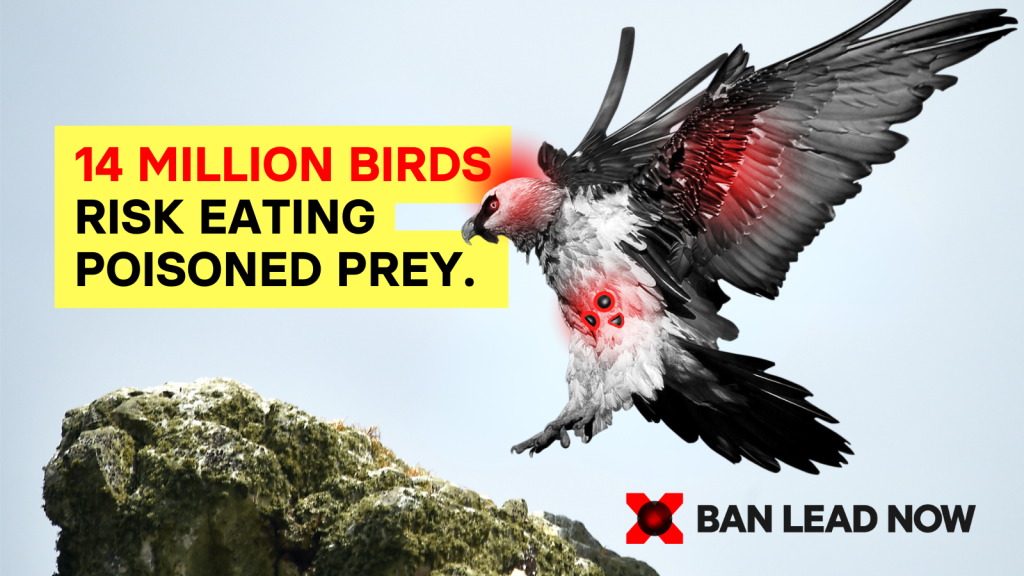
There is no safe level of lead exposure, which is why it’s already banned from petrol, paint and pipes. Yet, more than 44,000 tonnes of lead are still dispersed into the EU environment every year from hunting, sports shooting and fishing. Finally, in February 2025, the European Commission released its long-awaited proposal to restrict the use of lead in hunting, sports shooting, and fishing. The proposal is now being discussed by EU Member States. Sign our petition now to get it across the finish line.
Keeping our planet cool by investing in nature
The EU is currently developing a Climate Adaptation Strategy to make Europe more resilient to climate change. It’s set to be published next year. Science shows the smartest approach is to invest in nature – our best ally against climate change. Protecting and restoring ecosystems isn’t just good for wildlife. Healthy nature absorbs carbon, regulates water, reduces flooding, and protects communities adapt to extreme weather. We took part in the public consultation. and will continue advocating for Europe to invest in nature-based solutions to adapt to the impacts of climate change.
Planning with nature in the clean energy transition
Climate action also means speeding up clean energy. Energy & Housing Commissioner Dan Jørgensen has promised to ‘fundamentally slash’ permitting times for renewables to help meet EU climate goals. But faster deployment must not come at the expense of nature. We sent a public letter calling for strong environmental safeguards and will continue pressing for solutions that align renewable energy rollout with habitat protection and restoration efforts. By linking nature restoration and clean energy, the EU can tackle climate change while protecting biodiversity. And that’s the approach Europe needs.
As you can see, we’ll be busy in the coming months. So, stay tuned!

Photo: Yves Adams
 |
Stichting BirdLife Europe gratefully acknowledges financial support from the European Commission. All content and opinions expressed on these pages are solely those of Stichting BirdLife Europe. The European Commission is not responsible for any use that may be made of the information it contains. |