Securing Natural Resources
Planning renewable energy infrastructure in the right place from the start will mitigate climate change impacts and help millions of people, and birds in the region.
As a global Partnership, we believe in internationalism. We have translated as much content in your language as our resources allow. Please visit the English language site to view all of our content.

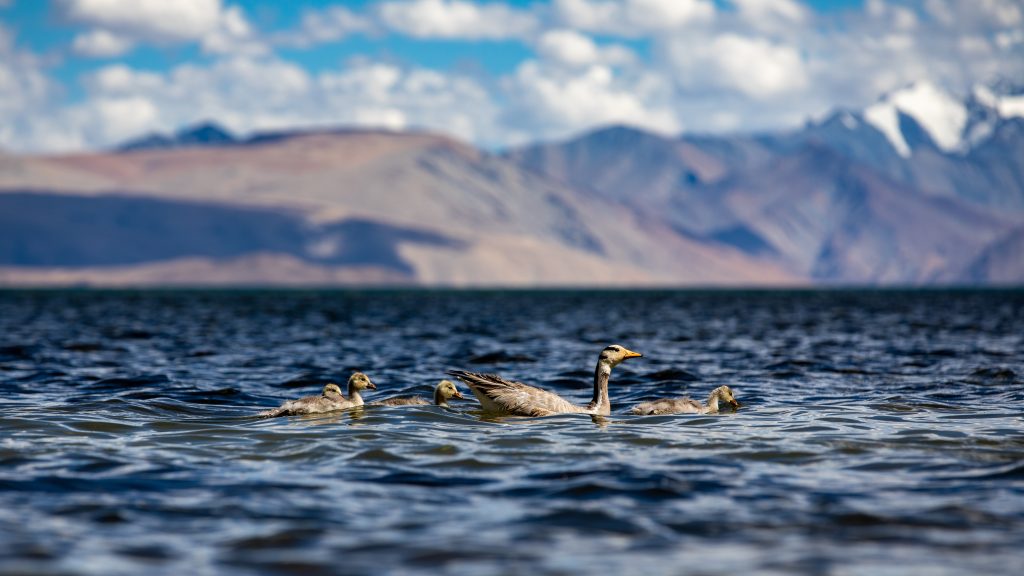
Central Asia is brimming with history. Relics of ancient cities are woven between mountains dating back 60 million years. The Himalayas have defined this region. These peaks have influenced thousands of years of trade and agriculture and directed the movements of wildlife across Central and South Asia.
Above these lands, great raptors circle on rising thermals and flocks of migratory birds travel between the Arctic and Indian Oceans every Spring and Autumn. Along the Central Asian Flyway, the same habitats that sustain birds also support the livelihoods of billions of people across 30 countries.

Planning renewable energy infrastructure in the right place from the start will mitigate climate change impacts and help millions of people, and birds in the region.
By combining scientific rigour with deep local knowledge, we’re mapping where birds travel and putting our efforts into protecting these habitats for birds and all wildlife.
Ecosystems across the flyway sustain the farms and cities of a growing population. Our conservation initiatives protect these environments and provide sustainable livelihood opportunities.
BirdLife is building conservation infrastructure along the flyway, bringing together 15 organisations from 13 countries to coordinate action across the region. This growing network is focused on the places that matter most: we have identified 32 critical sites where targeted investment in habitats, species and communities will have the greatest impact. Protecting these sites is the foundation on which a more secure future for birds and people across the region can be built.
BirdLife brings together conservationists, local communities, and governments in a collaboration that spans cultures, languages, and borders.
KAZAKHSTAN
Korgalzhyn State Nature Reserve and associated IBAs

Hero Species
Only bigger than a pigeon, the Critically Endangered Sociable Lapwing nests in the short, grazed areas of this landscape.
Protection Measures
The shallow lakes of Korgalzhyn provide food and shelter for thousands of migratory water birds, yet wastewater from nearby towns threatens to reshape the habitat. The Association for the Conservation of Biodiversity of Kazakhstan (Partner in Kazakhstan) is currently researching what this would mean for birds like the Sociable Lapwing.
Future Plans
After understanding the impacts of habitat change on species, we then plan to manage the habitat accordingly. This will take into account the community members as well by supporting sustainable livelihoods, tourism, and climate change mitigation and adaptation.

Your support is critical to ensure that BirdLife International can continue its work, delivering high impact and long-term conservation for both people and nature.